What it does
A fat-soluble antioxidant the body makes naturally. Applied topically, it neutralizes free radicals and supports the look of firmer, smoother skin, which is why it anchors many firming body and face creams.
Best for
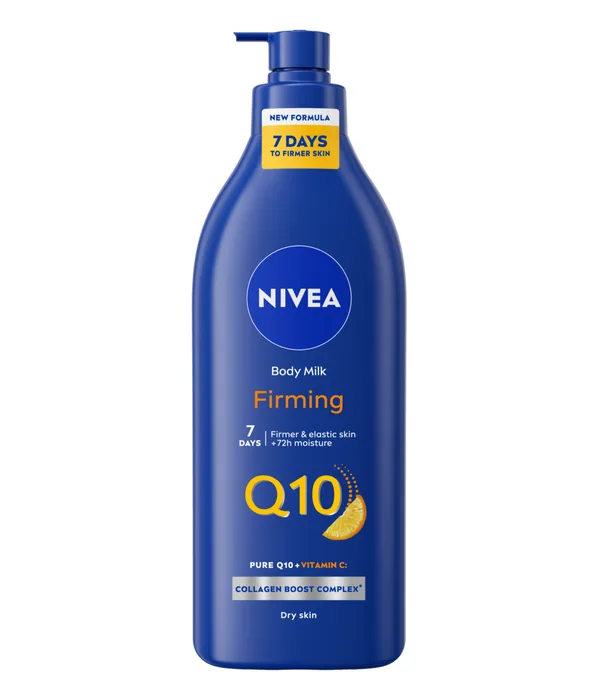
Firming and anti-age routines, environmental (pollution and UV) defense, and the appearance of elasticity. The signature active in Nivea's Q10 firming range.
What is Coenzyme Q10?
Coenzyme Q10 is a fat-soluble antioxidant that the body makes naturally, also called CoQ10 or ubiquinone. Every cell uses it to help produce energy and to defend against oxidative stress from free radicals.
In skin care, Q10 matters because the skin's own supply falls with age and sun exposure. Topical Q10 is used to restore that level and add antioxidant protection, which is why it shows up in firming and anti-age creams.
What does Coenzyme Q10 do for skin?
Coenzyme Q10 works mainly as an antioxidant. It neutralizes free radicals from UV and pollution, and by doing so it supports the look of firmer, smoother, more resilient skin over time.
Research shows that topical coenzyme Q10 raises the skin's own Q10 level and provides antioxidative effects, and Q10-containing formulas are linked to a reduction in the appearance of wrinkle depth.
Q10 is a gentle, slow active. It does not exfoliate or force cell turnover the way retinoids do, so it will not deliver a dramatic change, but it also will not irritate. That makes it an easy everyday antioxidant step.
Is Coenzyme Q10 good for firming?
Coenzyme Q10 supports the appearance of firmer skin, which is why it anchors dedicated firming lines. Nivea built an entire Q10 range around it, including the Nivea Q10 Firming Body Milk, and the ingredient is a common pairing with peptides in firming creams.
Set expectations at the appearance of firmness and better environmental defense, not a structural lift. For the strongest firming result, Q10 is best used alongside a retinoid and daily sunscreen rather than on its own.
How to use Coenzyme Q10
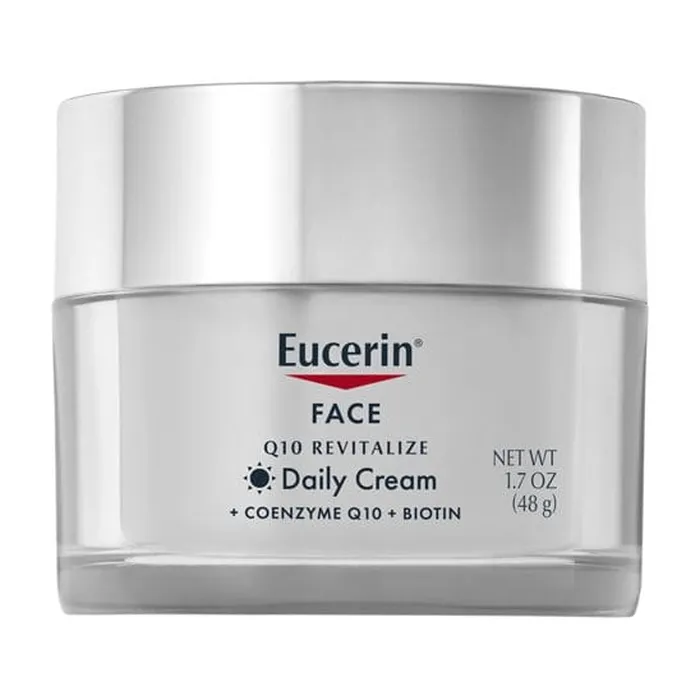
Q10 is easy to fit into a routine. Apply a Q10 serum or cream after cleansing, morning or night, and follow with sunscreen in the morning. It layers safely with most actives, including vitamin C and peptides, and rarely causes irritation, so it suits sensitive skin that cannot tolerate stronger anti-age ingredients.
Evidence
Topical coenzyme Q10 raises the skin's own Q10 level and delivers measurable antioxidative effects; Q10-containing formulas are associated with a reduction in the appearance of wrinkle depth.
Read the source: PubMed: Topical treatment with coenzyme Q10-containing formulas improves skin's Q10 level and provides antioxidative effects (BioFactors, 2015) ->