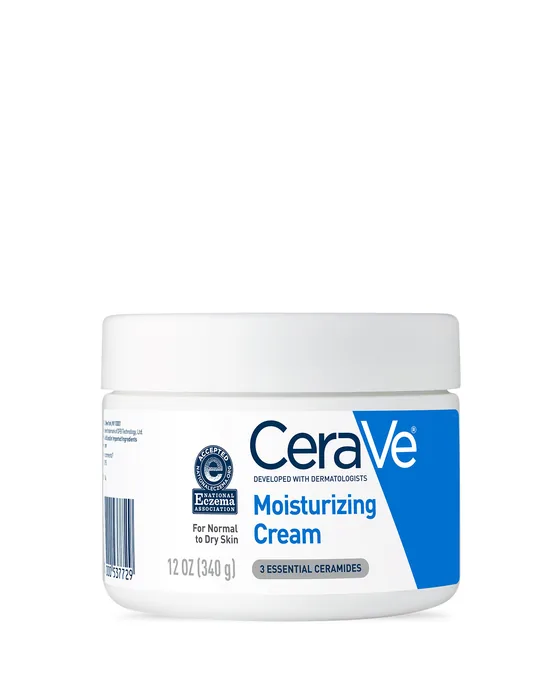
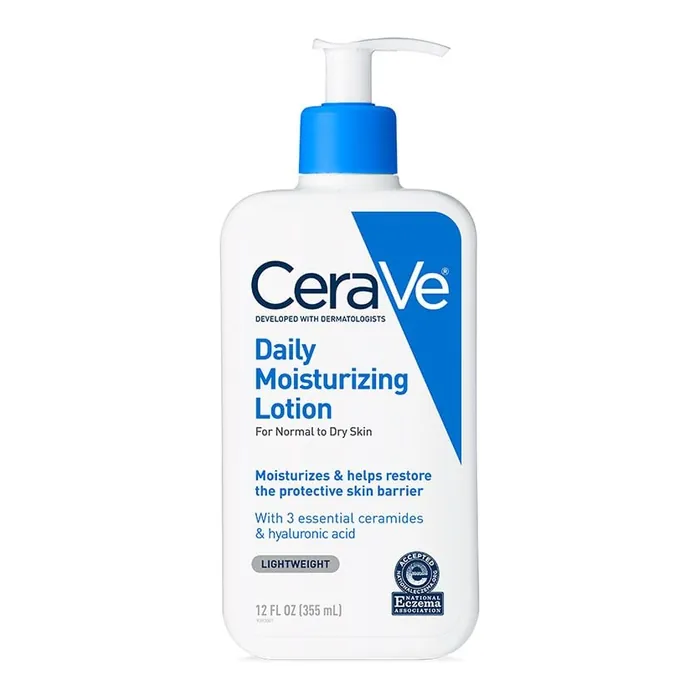
CeraVe Moisturizing Cream vs Lotion: the short answer
Pick CeraVe Moisturizing Cream if your skin is dry and you want a rich, sealing moisturizer. Pick CeraVe Daily Moisturizing Lotion if your skin is normal to oily, or you want something light enough for daytime and large areas of the body.
The two share their core: three ceramides (NP, AP and EOP), hyaluronic acid, glycerin and CeraVe's MVE delivery system, with no fragrance listed in either. CeraVe's own FAQ says the main difference is texture, and the ingredient lists show why: the cream contains petrolatum and the lotion does not. Ingredient lists come from cerave.com and prices from Ulta, read on October 13, 2026. This is a label-and-data comparison, not a hands-on test.
Choose this if
- Choose the Moisturizing Cream for dry skin, rough patches, or a night moisturizer. It lists petrolatum 7th.
- Choose the Daily Moisturizing Lotion for normal, combination or oily skin, or under makeup and sunscreen. CeraVe calls it lightweight and oil-free.
- Choose either on price. At Ulta, both cost $17.99 for 12 oz and $19.99 for 16 oz.
What is the difference between CeraVe Moisturizing Cream and Lotion?
Texture and occlusion. The cream adds petrolatum, which seals moisture in, and the lotion leaves it out for a lighter, oil-free feel.
| Moisturizing Cream | Daily Moisturizing Lotion | |
|---|---|---|
| Texture (CeraVe) | Rich, non-greasy cream | Lightweight, oil-free lotion |
| Skin type on the product page | Normal to dry | Normal to dry |
| Skin type in CeraVe's FAQ | Normal to dry | May suit normal to oily |
| Petrolatum | Yes, 7th ingredient | Not listed |
| Dimethicone | 13th | 6th |
| Ceramides on the list | NP, AP, EOP, 9th to 11th | NP 17th, AP 18th, EOP 25th |
| Hyaluronic acid | 16th | 23rd |
| Ingredients on the list | 24 | 25 |
| Fragrance | None listed | None listed |
| Where to use | Face and body | Face and body |
The ceramide positions are the detail most comparisons miss. In the cream, the three ceramides sit in the top half of the list; in the lotion, two sit in the bottom third and ceramide EOP comes last. That does not prove the cream holds more ceramide: only ingredients above 1% must be listed in order of concentration, and ceramides are typically used below that. CeraVe does not publish the amounts.
The lotion's page claims 48-hour hydration, without study details. The cream's US page makes no hour-based claim.
Which is better for dry skin?
The Moisturizing Cream. Petrolatum is one of the most effective occlusive ingredients, a seal that slows water loss, and the cream lists it 7th alongside its ceramides. CeraVe pitches the cream as rich yet non-greasy, and says it suits the whole family, ages 3 and up. For the driest spots, our best moisturizers for mature skin guide covers richer options.
Which is better for oily or combination skin?
The Daily Moisturizing Lotion. CeraVe describes it as lightweight and oil-free, and its FAQ says it may be better suited to normal to oily skin. It skips petrolatum and uses glycerin and dimethicone for slip and hydration instead. It also layers more easily under sunscreen and makeup in the morning.
The product page itself lists the lotion for normal to dry skin, the same as the cream, so the two are less far apart than the marketing suggests. On combination skin, many people use the lotion on the face and the cream on drier areas.
Can you use CeraVe Moisturizing Cream on your face?
Yes. CeraVe directs both products to the face and body, day or night. The cream is the heavier choice for the face, so if it feels too rich, switch to the lotion for daytime and keep the cream for the evening.
Which is cheaper per ounce?
Neither: Ulta charges the same for both at every shared size. The best value is the largest size of either.
| Size | Moisturizing Cream | Daily Moisturizing Lotion |
|---|---|---|
| Travel | 1.8 oz, $6.99 | 3 oz, $7.99 |
| 8 oz | Not sold | $14.99 |
| 12 oz | $17.99 ($1.50 per oz) | $17.99 ($1.50 per oz) |
| 16 oz | $19.99 jar ($1.25 per oz) | $19.99 ($1.25 per oz) |
| 16 oz pump | $20.99 | Not sold |
| 16 oz refill | $17.99 ($1.12 per oz) | Not sold |
These are Ulta's one-time list prices on October 13, 2026. The cream's ounces are weight and the lotion's are fluid ounces, as printed on each package, so per-ounce figures are close but not perfectly like for like. Ulta's Replenish and Save subscription took 5% off most sizes.
Should you use both?
Plenty of people do, and the shared ingredients make that easy: the lotion in the morning and on the body, the cream at night or on dry areas. If you are also choosing a face wash, our CeraVe vs Cetaphil cleanser comparison covers CeraVe's three cleansers. Weighing CeraVe against Cetaphil's cream instead? See CeraVe vs Cetaphil moisturizer.
What we would buy
- Dry skin, or a night cream: CeraVe Moisturizing Cream, in the 16 oz refill for the lowest price per ounce.
- Normal to oily skin, or a daytime face moisturizer: CeraVe Daily Moisturizing Lotion.
- Both: the lotion by day and on the body, the cream at night.