CeraVe vs AmLactin: the short answer
Pick AmLactin if you want a stated acid strength and a lower price per ounce: Daily Nourish states 12% lactic acid and costs $1.42 per ounce. Pick CeraVe SA Cream if you want salicylic acid, lactic acid and three ceramides in one jar, knowing CeraVe does not publish the percentage of either acid.
CeraVe and AmLactin both sell exfoliating body moisturizers for rough, dry, bumpy-feeling skin on arms, legs, elbows and heels. This comparison covers six products, three per brand, priced from $19.99 to $25.99 at regular retail. It is a label-and-data comparison, not a hands-on test, with prices and ingredient lists read from cerave.com, amlactin.com, Ulta and Target on September 29, 2026.
AmLactin builds each product around one acid at a stated strength, 12% or 15% lactic acid, on ingredient lists of 12 to 22 items. CeraVe's SA line pairs salicylic acid and lactic acid with ceramides on lists of 26 to 29 items, and prints no acid percentage. Some retailer listings for both brands name a skin condition in their marketing; this comparison stays with texture, dryness and what the labels say.
Choose this if
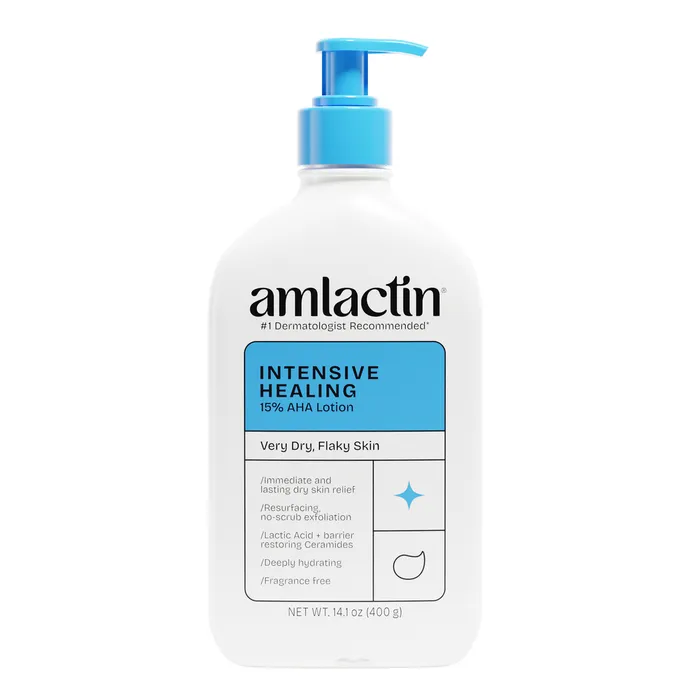
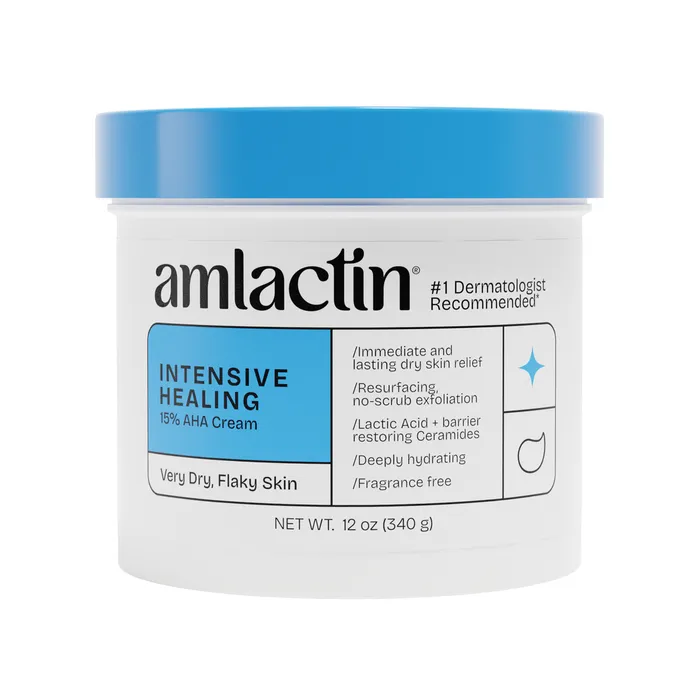
- Choose AmLactin if you want to know the acid strength. Daily Nourish states 12% lactic acid, and Intensive Healing Lotion and Intensive Healing Cream state 15%. CeraVe publishes no percentage for SA Cream or SA Lotion.
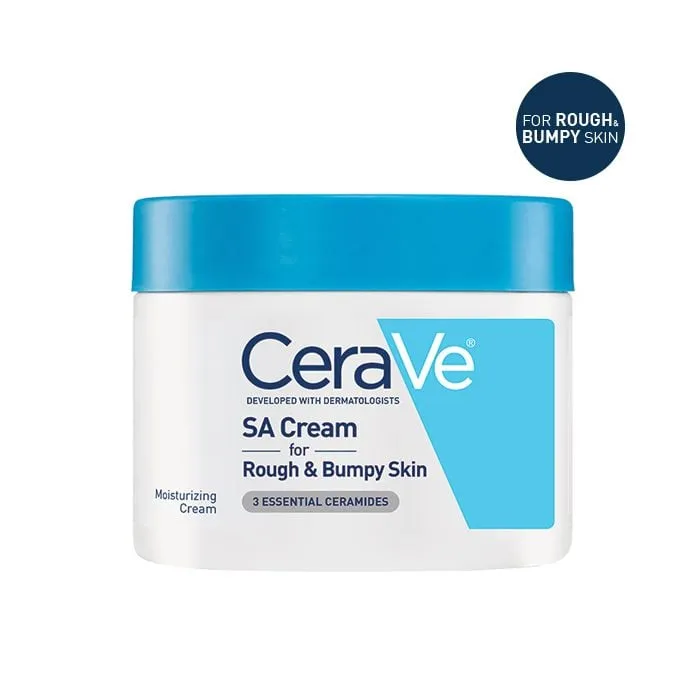
- Choose CeraVe SA Cream if you want exfoliating acids and ceramides in one product. It lists salicylic acid 7th, ammonium lactate 10th, and ceramides NP, AP and EOP.
- Choose AmLactin Daily Nourish for the lowest price per ounce among the acid products here: $1.42 per ounce by net weight, against $2.17 for SA Cream and $2.50 per fluid ounce for SA Lotion.
What is the difference between CeraVe SA and AmLactin?
CeraVe SA pairs two exfoliating acids with ceramides and does not publish how much acid it uses, while AmLactin uses one acid, lactic acid, at a stated 12% or 15%.
AmLactin's ingredient lists never print the words "lactic acid". They show ammonium lactate, 2nd after water in all three products. Ammonium lactate is the form of lactic acid on the label, and AmLactin states its 12% and 15% figures as lactic acid. Ulta's listing for Daily Nourish calls ammonium lactate "a pH-balanced type of Lactic Acid".
CeraVe does the same with its second acid. The SA Cream page names lactic acid, and the label lists ammonium lactate 10th, behind salicylic acid 7th. In SA Lotion, salicylic acid is 5th and ammonium lactate 7th. CeraVe does not publish the percentage of either acid, and the Ulta and Target listings give none. A label position is not a percentage, so the order cannot tell you how much acid the SA products hold.
AmLactin says it recently upgraded its formulas, and Ulta and Target still show older ingredient lists. This comparison uses the lists on amlactin.com, and the brand tells shoppers to check the list on the package.
CeraVe SA Cream vs AmLactin Daily Nourish 12%: which is better for rough, dry skin?
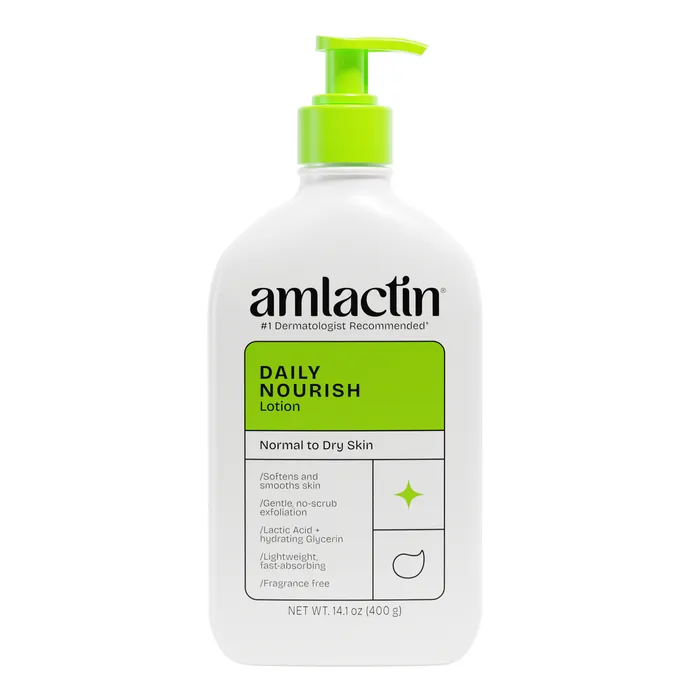
AmLactin Daily Nourish 12% is the better buy if you want a stated acid strength, a short ingredient list and a lower price per ounce. CeraVe SA Cream is the better buy if you want two acids plus ceramides in a thicker cream. Daily Nourish is the lotion AmLactin used to sell as Daily Moisturizing Body Lotion.
| SA Cream for Rough & Bumpy Skin | Daily Nourish Lotion with 12% Lactic Acid | |
|---|---|---|
| Price and size (US, regular) | $25.99 for 12 oz (Ulta) | $19.99 for 14.1 oz, 400 g net weight (Ulta) |
| Price per ounce | $2.17 | $1.42 |
| Format | Cream in a jar | Lotion in a pump bottle |
| Exfoliating acids | Salicylic acid 7th, ammonium lactate 10th | Ammonium lactate 2nd |
| Acid percentage | Not published by CeraVe | 12% lactic acid, stated by AmLactin |
| Ceramides | Ceramide NP, AP and EOP, 14th to 16th | None listed |
| Other named ingredients | Glycerin 2nd, niacinamide 8th, hydrolyzed hyaluronic acid | Glycerin 4th, dimethicone 6th |
| Ingredients on the list | 29 | 12 |
| Fragrance | None listed | None listed |
| AHA sunburn alert | Yes | Yes |
Both lists put mineral oil 3rd, then split. AmLactin stops at 12 ingredients. CeraVe's runs to 29 and adds niacinamide, three ceramides, cholesterol and vitamin D, listed as cholecalciferol. Target calls the SA Cream texture rich and velvety; AmLactin calls Daily Nourish lightweight and fast-absorbing. Ulta's listing notes a 2024 Allure Best of Beauty Award for Daily Nourish, an editorial award rather than a test result.
What each brand's own claims say
Neither brand publishes a sample size, study length or product test for these claims. AmLactin calls its 12% and 15% concentrations "clinically proven" and calls itself the "#1 dermatologist-recommended moisturizer brand with lactic acid", footnoted "Data on file 2023." CeraVe says SA Cream is designed to improve skin texture and soften very dry, rough skin, with hydration described as "all day" on cerave.com and "24-hour" on Target. Read these as brand marketing.
Is AmLactin 15% stronger than CeraVe SA?
AmLactin's Intensive Healing Lotion and Cream state 15% lactic acid, the top of the 5% to 15% range the brand gives for its formulas, but no strength comparison with CeraVe SA is possible, because CeraVe publishes no percentages.
Intensive Healing Lotion with 15% Lactic Acid, formerly Rapid Relief Lotion, costs $24.99 for 14.1 oz (400 g) at Target. Its 16 ingredients put ammonium lactate 2nd, glycerin 3rd and petrolatum 5th, plus vitamin E and one ceramide, listed as Ceramide 3. Intensive Healing Cream with 15% Lactic Acid, formerly Rapid Relief Cream, is a 12 oz (340 g) jar at $24.99 from Ulta, which AmLactin describes as a rich cream for extra-dry or severely dry skin.
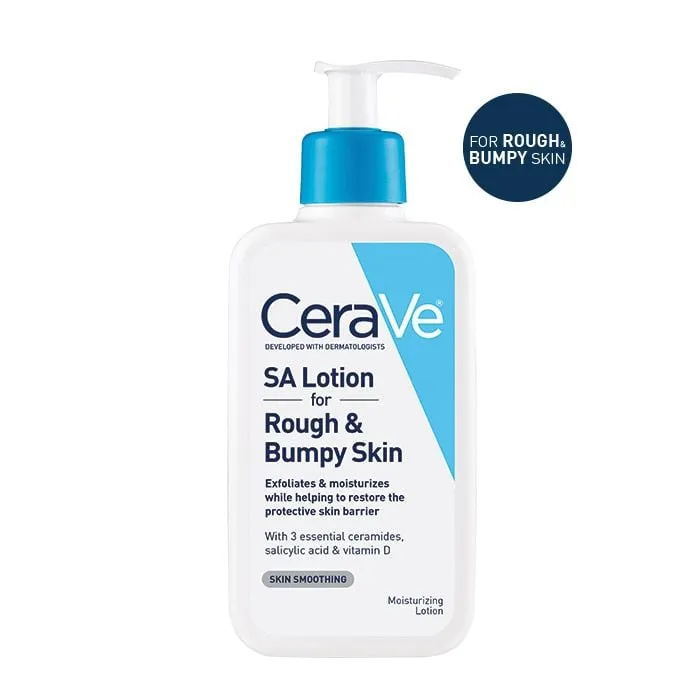
CeraVe's lighter option is SA Lotion for Rough & Bumpy Skin, $19.99 for 8 oz in a pump. It keeps the three ceramides and moves salicylic acid up to 5th, but its cerave.com ingredient list has no niacinamide.
Concentration is where AmLactin makes its case. Ulta's listing for the 15% lotion says a clinical trial on lactic acid found the most significant skin improvements at 10% or higher, without naming the study. Published research exists, though none of it tests these products. A 1989 double-blind study found 12% ammonium lactate lotion reduced the severity of moderate to severe dry skin more than 5% lactic acid lotion over 3 weeks of twice-daily use. A 1996 study that compared 5% and 12% lactic acid over 3 months found both improved skin smoothness, while only 12% produced measured changes in the dermis, the deeper layer of skin.
Is there an acid-free option? CeraVe Moisturizing Cream vs AmLactin Intensive Healing Cream
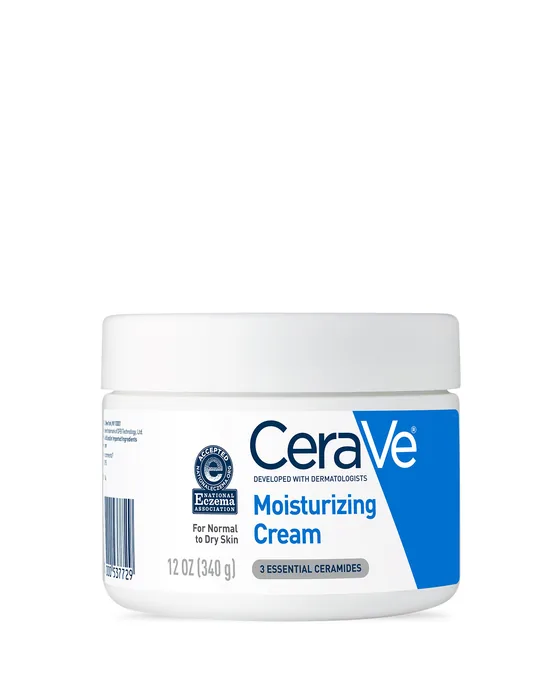
Only from CeraVe: its Moisturizing Cream has no exfoliating acid and no sunburn alert at $1.25 per ounce, while every AmLactin formula contains lactic acid, 5% to 15% by the brand's own description.
| Moisturizing Cream | Intensive Healing Cream with 15% Lactic Acid | |
|---|---|---|
| Price and size (US, regular) | $19.99 for 16 oz (Ulta) | $24.99 for 12 oz, 340 g net weight (Ulta) |
| Price per ounce | $1.25 | $2.08 |
| Exfoliating acid | None | 15% lactic acid, listed as ammonium lactate 2nd |
| Ceramides | Ceramide NP, AP and EOP, 9th to 11th | Ceramide 3, 20th |
| Petrolatum | 7th | 14th |
| Fragrance | None listed | None listed |
| AHA sunburn alert | No | Yes |
| Stated hydration window | 48 hours (Ulta, method not stated) | 24 hours (Ulta, method not stated) |
CeraVe says Moisturizing Cream was developed with dermatologists and clinically tested, without publishing a sample size. Its directions cover face and body, day or night, and the brand calls it suitable for ages 3 and up. With nothing that exfoliates, it does a different job from the SA line.
Do CeraVe SA and AmLactin make skin more sensitive to the sun?
Both brands warn that they can: all three AmLactin products and both CeraVe SA products carry an AHA sunburn alert, and only CeraVe Moisturizing Cream carries none. AmLactin's alert reads:
"This product contains an alpha hydroxy acid (AHA) that may increase your skin's sensitivity to the sun and particularly the possibility of sunburn. Use sunscreen, wear protective clothing, and limit sun exposure while using this product and for a week afterwards."
CeraVe's SA Cream and SA Lotion print the same alert in nearly the same words.
What the labels say about how to use them
AmLactin's directions say to apply 1 to 2 times daily (2 times for Daily Nourish on the brand site), and all three labels note that mild stinging or irritation may occur on sensitive or broken skin. CeraVe's brand directions for both SA products say to apply to affected areas only, and SA Lotion adds: "Do not apply over a large area of the body." AmLactin's directions do not mention an area limit. For spacing acids across a routine, see our guide on how often to exfoliate.
Who owns CeraVe and AmLactin?
CeraVe belongs to L'Oréal, and AmLactin belongs to Advantice Health, LLC, a Bridgewater, New Jersey company that calls itself a portfolio company of TA Associates. Advantice's other brands include Kerasal, Triple Paste, Dermoplast and New Skin.
Upsher-Smith Laboratories announced on December 19, 2016 that Sandoz Inc. had acquired the AmLactin brand family, and Sandoz still marketed it in March 2021. Advantice says it was formed in 2019 and later acquired AmLactin, without giving a date. amlactin.com sells nothing directly: its Buy Now buttons send shoppers to retailers, so every AmLactin price here is a retailer price.
Which is cheaper, CeraVe or AmLactin?
AmLactin is cheaper per ounce for an acid moisturizer, with Daily Nourish at $1.42 against $2.17 for CeraVe SA Cream, but CeraVe's acid-free Moisturizing Cream is the lowest of all six at $1.25.
| Product | Regular price | Size as printed | Unit | Per ounce |
|---|---|---|---|---|
| AmLactin Daily Nourish 12% | $19.99 (Ulta) | 14.1 oz (400 g) | Net weight | $1.42 |
| AmLactin Intensive Healing Lotion 15% | $24.99 (Target) | 14.1 oz (400 g) | Net weight | $1.77 |
| AmLactin Intensive Healing Cream 15% | $24.99 (Ulta) | 12 oz (340 g) | Net weight | $2.08 |
| CeraVe SA Cream | $25.99 (Ulta) | 12 oz | Ounces, type not printed | $2.17 |
| CeraVe SA Lotion | $19.99 (Ulta) | 8 oz (Target: 8 fl oz, 237 ml) | Fluid ounces | $2.50 |
| CeraVe Moisturizing Cream | $19.99 (Ulta) | 16 oz | Ounces, type not printed | $1.25 |
Per-ounce figures divide the regular price by the ounces printed, so check the unit column: AmLactin prints net weight, and Ulta lists the CeraVe jars in plain ounces.
Sales move these numbers. On September 29, 2026, Ulta had Daily Nourish at $13.99, Intensive Healing Cream at $17.49, SA Cream at $19.49, and SA Lotion and Moisturizing Cream at $14.99 each.
Which is better for sensitive skin, CeraVe or AmLactin?
Going by the labels, CeraVe and AmLactin are close: none of the six products lists fragrance or denatured alcohol. AmLactin's lists are shorter and list no parabens, while CeraVe's two SA products list methylparaben and propylparaben.
| Product | Fragrance listed | Parabens listed | Denatured alcohol | Ingredients |
|---|---|---|---|---|
| AmLactin Daily Nourish 12% | No | None | Not listed | 12 |
| AmLactin Intensive Healing Lotion 15% | No | None | Not listed | 16 |
| AmLactin Intensive Healing Cream 15% | No | None | Not listed | 22 |
| CeraVe SA Cream | No | Methylparaben 19th, propylparaben 26th | Not listed | 29 |
| CeraVe SA Lotion | No | Methylparaben 18th, propylparaben 23rd | Not listed | 26 |
| CeraVe Moisturizing Cream | No | None | Not listed | 24 |
AmLactin states all three products are fragrance-free, dye-free, paraben-free and phthalate-free. Ulta's copy for Daily Nourish mentions a natural scent from the lactic acid salts that fades after application. Target's listings call CeraVe SA Cream allergy-tested and SA Lotion hypoallergenic. Patch-test either brand, and start any acid slowly.
What we would buy
- A stated acid strength at the lowest price per ounce: AmLactin Daily Nourish 12%.
- Two acids plus ceramides in a thicker cream: CeraVe SA Cream.
- A pump lotion with salicylic acid and ceramides: CeraVe SA Lotion, within its "affected areas only" directions.
- AmLactin's highest stated strength in a pump: Intensive Healing Lotion 15%.
- The same 15% in a richer jar: AmLactin Intensive Healing Cream.
- Dryness without rough texture, on face and body: CeraVe Moisturizing Cream.
Also weighing Eucerin? Our CeraVe vs Eucerin and Cetaphil vs Eucerin comparisons use the same label-and-data method.
Sources
- AmLactin product pages, ingredient lists, footer and terms of service, amlactin.com, captured September 29, 2026
- CeraVe product pages and ingredient lists for SA Cream, SA Lotion and Moisturizing Cream, cerave.com, captured September 29, 2026
- Ulta Beauty listings for all six products, and Target listings for Intensive Healing Lotion, SA Cream and SA Lotion, captured September 29, 2026
- PR Newswire releases: Upsher-Smith on the AmLactin sale to Sandoz, December 19, 2016; Sandoz on the Rapid Relief Restoring Cream launch, March 9, 2021; Advantice Health on its new CEO, June 3, 2024
- TA Associates careers listing for Advantice Health, careers.ta.com
- Rogers RS 3rd et al. Comparative efficacy of 12% ammonium lactate lotion and 5% lactic acid lotion in the treatment of moderate to severe xerosis. Journal of the American Academy of Dermatology, 1989 (PMID 2808786)
- Smith WP. Epidermal and dermal effects of topical lactic acid. Journal of the American Academy of Dermatology, 1996 (PMID 8784274)
Editor's update
Published September 29, 2026. Prices, sizes, ingredient lists and brand claims were read from amlactin.com, cerave.com, ulta.com and target.com on that date. amlactin.com sells nothing directly, so AmLactin prices come from Ulta, except Intensive Healing Lotion, which comes from Target because Ulta sells that lotion only in a 7.9 oz size and it was out of stock. CeraVe prices and sizes come from Ulta because cerave.com shows no size. AmLactin says it recently upgraded its formulas while retailer listings still show older ingredient lists, so this comparison uses the amlactin.com lists. CeraVe does not publish salicylic acid or lactic acid percentages for the US SA products, and none is estimated here. Tables use regular prices; sale prices seen on September 29, 2026 are noted separately.