CeraVe vs Eucerin: the quick answer
CeraVe and Eucerin are both dermatologist-recommended and both easy to find at a drugstore. The difference is the hero ingredient.
CeraVe is a ceramides line. It builds nearly every formula around three barrier-identical ceramides plus hyaluronic acid, aimed squarely at barrier repair.
Eucerin leans on urea, a humectant that draws in water and gently softens rough skin, supported by ceramides and glycerin in many of its creams.
For fragrance-free facial care and barrier support, CeraVe is the more natural fit. For rough, bumpy, or very dry body skin, Eucerin's urea formulas often have the edge.
The shortest version
Choose CeraVe for ceramide-led barrier repair and gentle facial care.
Choose Eucerin for urea-led hydration on rough or very dry body skin.
What is the difference between CeraVe and Eucerin?
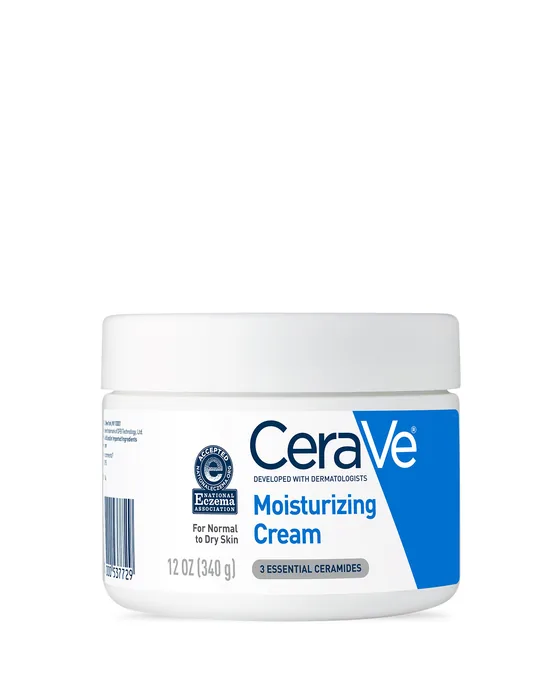
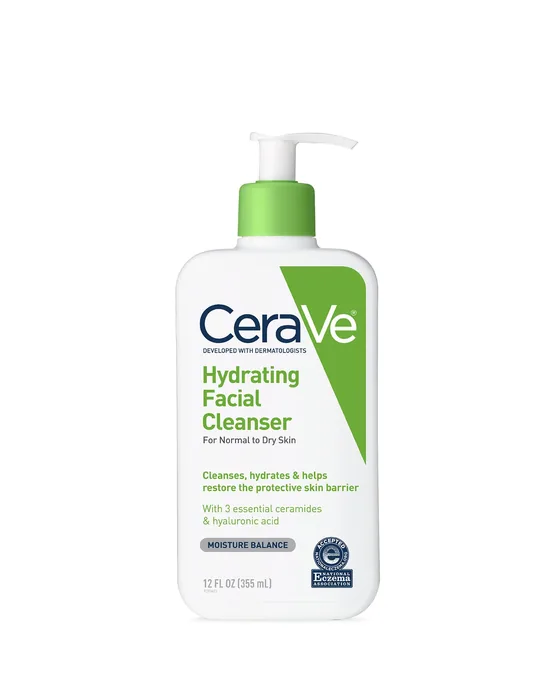
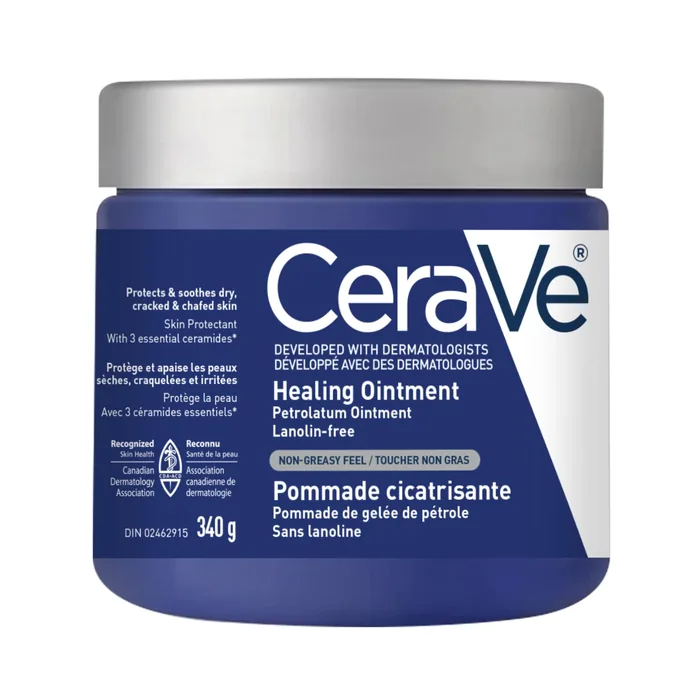
CeraVe, owned by L'Oreal, centers on ceramides and an MVE delivery system that releases ingredients gradually. Its Moisturizing Cream, Hydrating Facial Cleanser, and Healing Ointment all share that ceramide-forward identity.
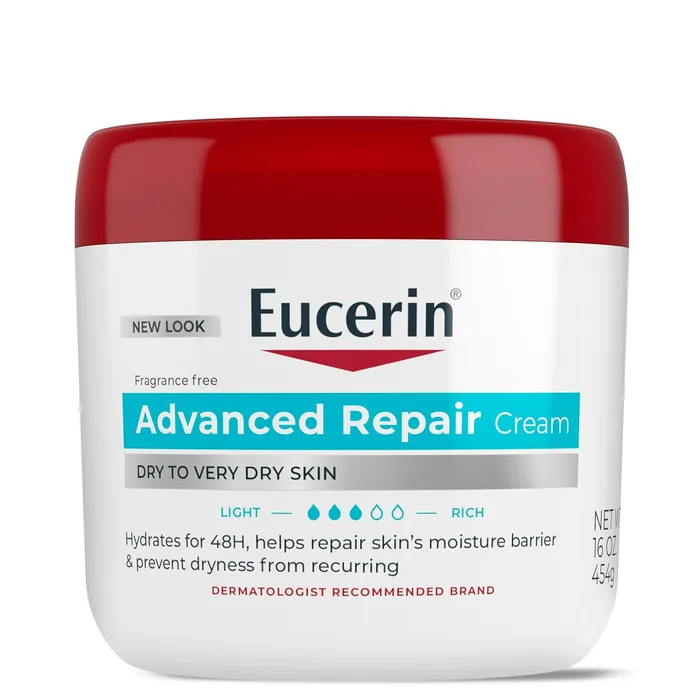
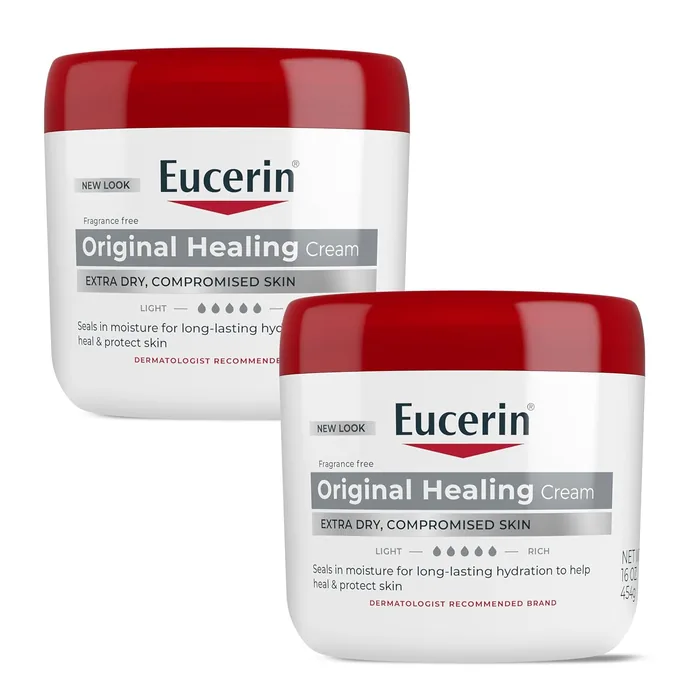
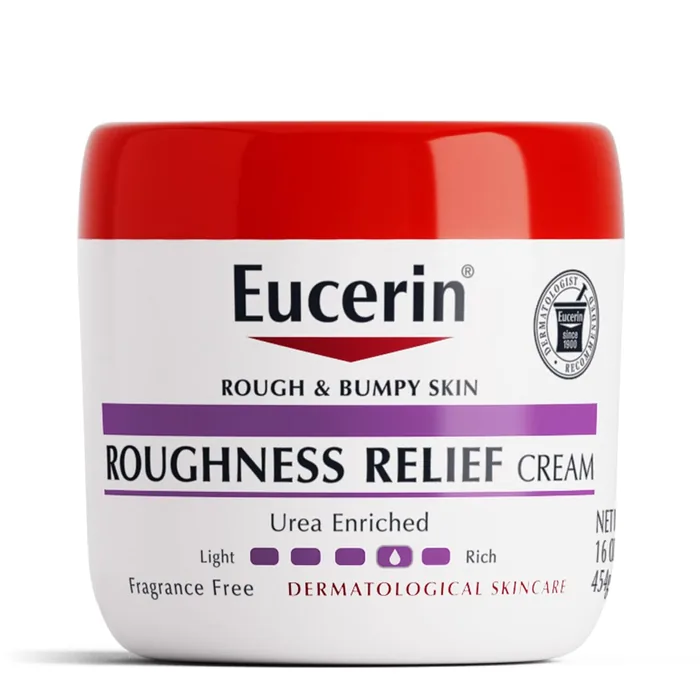
Eucerin, owned by Beiersdorf, is built on more than a century of emulsion science. Its Advanced Repair Cream pairs urea with ceramide and natural moisturizing factors, its Roughness Relief Cream uses more urea to smooth bumpy skin, and its Original Healing Rich Cream is a petrolatum-based emollient.
| Line | Hero ingredient | Strongest use |
|---|---|---|
| CeraVe | Three ceramides plus hyaluronic acid | Barrier repair, facial care |
| Eucerin | Urea, plus ceramides and glycerin | Rough, very dry body skin |
Ingredients comparison
Ceramides are the lipids that help hold the skin barrier together, so a ceramide-led approach makes sense for compromised or reactive skin. CeraVe's whole range is designed around replacing them.
Urea does something different. At lower levels it acts as a humectant that pulls in water; at higher levels it also softens and gently exfoliates rough, thickened skin. That is why Eucerin's urea creams are a favorite for keratosis-pilaris-prone arms and rough heels. Both approaches reduce water loss and support the barrier, just through different mechanisms.
Face, body, and daily use
For the face, CeraVe is the more obvious pick. Its Moisturizing Cream and non-foaming Hydrating Facial Cleanser are fragrance-free and gentle, and the range includes targeted options like the Healing Ointment for very dry spots.
For the body, especially rough or bumpy areas, Eucerin's urea creams are the more specific tool. The Advanced Repair Cream is a strong everyday body moisturizer, and the Roughness Relief Cream targets texture directly.
| Use case | Better fit | Why |
|---|---|---|
| Fragrance-free facial moisturizer | CeraVe | Ceramide-led, gentle on the face |
| Rough, bumpy body skin | Eucerin Roughness Relief | Higher urea softens texture |
| Barrier repair after actives | CeraVe | Ceramides plus hyaluronic acid |
| Everyday body cream | Eucerin Advanced Repair | Urea and ceramide hydration |
| Very dry spot protection | CeraVe Healing Ointment | Petrolatum plus ceramides |
Which should you choose?
If your priority is the face and barrier repair, CeraVe is the cleaner fit and the easier range to build a routine around. If your priority is rough or very dry body skin, Eucerin's urea creams do a job CeraVe does not really target.
Plenty of people use both: CeraVe on the face, Eucerin on the body. Price is close, so let the ingredient match decide. For another sensitive-skin angle, our CeraVe vs Cetaphil comparison is worth a look.
Choose CeraVe if...
- you want ceramide-led barrier repair
- you are building a fragrance-free facial routine
- you like a cushioned, gentle cream
Choose Eucerin if...
- you have rough, bumpy, or very dry body skin
- you want urea-based hydration and softening
- you need a heavier-duty body cream
Limitations and honest expectations
Neither line cures eczema, keratosis pilaris, or chronic dryness. They manage symptoms and support the barrier, which can make dry and reactive skin far more comfortable, but the underlying condition remains.
Eucerin's Roughness Relief Cream contains an alpha hydroxy acid, so use sunscreen with it. And while both lines are gentle, patch testing any new product is still smart for reactive skin.
Editor's update · August 2, 2026
For this August 2026 refresh we rechecked pricing and stock. CeraVe's ceramide focus still suits facial barrier repair, while Eucerin's urea creams remain the stronger pick for rough, very dry body skin; the two split cleanly by use case.