What it does
Proteins that signal skin cells to grow, divide, and produce structural components (collagen, elastin, hyaluronic acid).
Best for
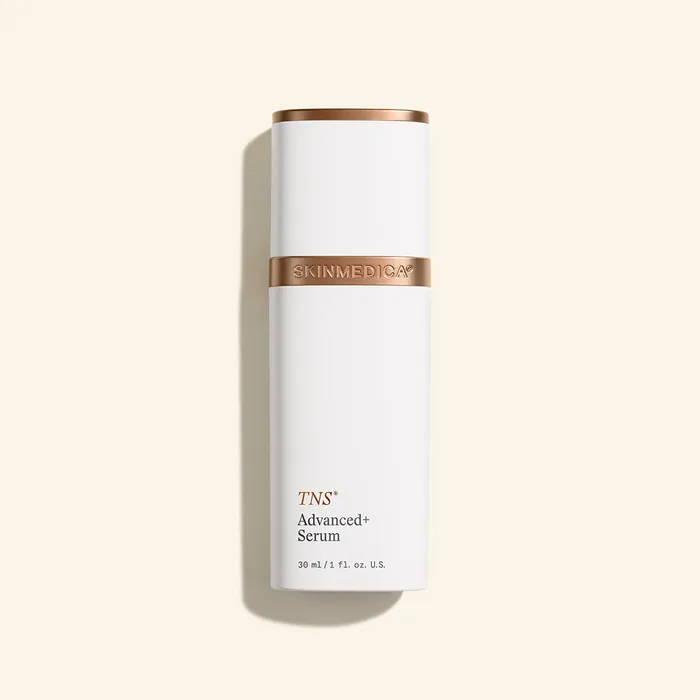
Mature skin investing in clinical-grade rejuvenation. Headline active in SkinMedica TNS Advanced+ Serum.
What are Growth Factors?
Growth factors are signaling proteins your body makes to direct how skin cells behave. Fibroblasts, keratinocytes, and immune cells release them, and they act a little like local hormones: they bind to receptors on nearby cells and change what those cells do, telling them to survive, divide, migrate, or produce structural proteins like collagen and elastin.
In skincare you will see specific families named on labels. Epidermal growth factor (EGF) speaks mainly to keratinocytes in the outer skin. Transforming growth factor beta (TGF-beta) and the fibroblast growth factors (FGF) influence fibroblasts and the deeper matrix. Because natural growth factor activity declines with age, the idea behind topping them up topically is to nudge tired skin toward a fresher, firmer look.
What they do and do not do
In wound care, where growth factors are applied to open skin, the evidence is stronger. A clinical guideline on topical growth factors for skin wounds found reasonable support for EGF, FGF, GM-CSF, and PDGF in settings like burns and diabetic ulcers, and reported no adverse reactions attributed directly to their use on wounds. That is a very different situation from intact skin.
On normal, unbroken skin the honest summary is helps the look of, not rebuilds. Reviews describe improvement in the appearance of fine lines, texture, tone, and hydration, typically over four to eight weeks. What growth factors do not do is guarantee new collagen or reverse aging. They are a signal, not a filler or a resurfacing tool.
A realistic way to frame it:
- They may support a smoother, firmer, more even appearance over time.
- They can improve the appearance of fine lines and dullness for some users.
- They do not erase wrinkles, treat medical conditions, or replace sun protection.
- Results are gradual and vary widely between people and formulas.
The penetration and evidence question
The central scientific debate is whether these proteins get in at all. Most growth factors are large molecules, and the outer skin barrier is designed to keep large molecules out. As DermNet puts it, their large molecular size prevents easy entry, and the proposed mechanism is that only a small fraction reaches the superficial epidermis and starts a signaling chain to deeper fibroblasts.
Formulators respond with smaller recombinant proteins, liposomal delivery, and pairing with procedures that briefly open the barrier. A systematic review of EGF in aesthetics noted that most trials pointed toward visible improvement, but that the strongest results came from intradermal delivery, and that quasi-experimental and uncontrolled studies still dominate the field. Grade the evidence as moderate and mixed: promising, frequently small, and often industry connected.
There is also an open safety conversation. Because growth factors tell cells to proliferate, reviewers have flagged theoretical questions about long-term use, stability, and unwanted cell activity, and they consistently note that well-controlled long-term studies are lacking.
Sources of growth factors
Labels differ mostly by where the proteins come from and how they are grown.
| Source | What it is | Notes |
|---|---|---|
| Human derived | Made by human fibroblasts or stem cell cultures in a lab | Closest match to skin's own signals; not raw human tissue |
| Plant derived | Plant proteins marketed as growth factor like | Lower theoretical concern, but less direct skin relevance |
| Snail derived | Snail secretion filtrate carrying growth factors and other actives | Popular in K-beauty; a blend, not isolated growth factors |
| Synthetic recombinant | Bioengineered smaller proteins | Designed for better stability and penetration |
None of these is automatically superior. Formulation quality, concentration, packaging, and delivery system matter more than the buzzword on the front of the bottle.
Who they suit and how to use them
Growth factors suit people focused on general appearance of aging, fine lines, rough texture, and dullness, especially anyone recovering from or maintaining results after microneedling, laser, or similar procedures, when the barrier is briefly more receptive. Sensitive and reactive skin types usually tolerate them well since they are not exfoliating acids.
Apply a growth factor serum to clean skin, typically before heavier creams, once or twice daily per the product directions. Give it a consistent eight to twelve weeks before judging. They layer comfortably with peptides, niacinamide, and hyaluronic acid, and daytime use should always sit under sunscreen. If you use prescription actives or are pregnant or breastfeeding, check with a clinician first, since long-term topical data are limited.
Evidence
Topical growth factor blends have shown improvements in fine lines, sagging, and skin texture in controlled trials.
Read the source: PMC: epidermal growth factor in aesthetics and regenerative medicine, systematic review ->Reviewed August 2, 2026: Reviewed August 2026. Topical growth factors remain an emerging, mostly early-evidence category, with formulation and delivery still the open questions.