La Roche-Posay vs Avène: the short answer
Pick La Roche-Posay if you want the lower price per ounce and a moisturizer with ceramides and niacinamide. Pick Avène if your skin reacts to most products and you want to see how many people a brand tested its claims on.
Both brands sell the same four staples: a thermal spring water mist, a moisturizer for sensitive skin, a gentle cleanser, and a multi-purpose barrier cream. None of the eight lists fragrance or denatured alcohol, so price, format, and published evidence decide it.
We compared four products from each brand using the prices, ingredient lists, and claim footnotes on laroche-posay.us and aveneusa.com on September 17, 2026. We did not test them on skin.
Choose this if
- Choose La Roche-Posay if price matters most. Each La Roche-Posay product costs less per ounce than its Avène counterpart, and the widest gap is in moisturizers: $7.39 per ounce for Toleriane Double Repair against $29.57 for Tolerance Control.
- Choose Avène if preservatives bother your skin. Tolerance Control comes in sterile packaging, and Avène describes the formula as preservative-free.
- Choose Avène if you want to know how a claim was tested. Avène gives sample sizes for figures on Cicalfate+, Tolerance Control, and its Tolerance cleanser. La Roche-Posay's US pages for the four products here give none.
Are La Roche-Posay and Avène owned by the same company?
No. La Roche-Posay has been owned by L'Oréal since 1989, while Avène is made by Pierre Fabre Laboratories, the company French pharmacist Pierre Fabre created in 1962. La Roche-Posay's history is covered on our La Roche-Posay brand page.
Pierre Fabre's site says the Pierre Fabre Foundation, a government-recognized public-interest foundation, owns 86% of the company, with employees holding a smaller share.
Sources disagree on when Pierre Fabre bought the hydrotherapy center, so the table gives a range.
| Year | Event |
|---|---|
| 1736 | The Sainte-Odile spring gains its skin-soothing reputation, after a horse with a skin condition recovers from bathing in it |
| 1874 | The spring is declared of public benefit, and its water is state-approved in France |
| 1974 to 1975 | Pierre Fabre buys the Avène hydrotherapy center and starts research on the water (Pierre Fabre says 1974, the center says 1975) |
| 1990 | Pierre Fabre launches the Eau Thermale Avène brand |
| 2023 | Avène becomes the first Pierre Fabre brand to reach one billion euros in turnover |
Avène products are developed in Toulouse and made at a plant next to the spring. The hydrotherapy center treats about 3,000 patients a year in three-week programs, and Pierre Fabre reports the brand sold 130 million units in 2023. More history is on our Avène brand page.
How to read La Roche-Posay and Avène test claims
Every result figure from La Roche-Posay and Avène in this article comes from the brands' own US websites. The figures show what each formula was designed to do, not independent proof, and they fall into three groups:
- Clinical or instrumental results. A dermatologist grades the skin, or a lab test or device measures it.
- Consumer self-assessments. People rate how their own skin feels. This tells you testers liked the product, not how much their skin changed.
- No published sample size. The brand prints a number but not how many people took part or what kind of test it was. We label these brand-reported with no published sample size.
Avène publishes more of these details. Its figures for Cicalfate+, Tolerance Control, and the Tolerance cleanser come with sample sizes. La Roche-Posay's figures for the four products here do not, and neither brand gives a sample size for its thermal water claims.
La Roche-Posay vs Avène thermal spring water: which is better?
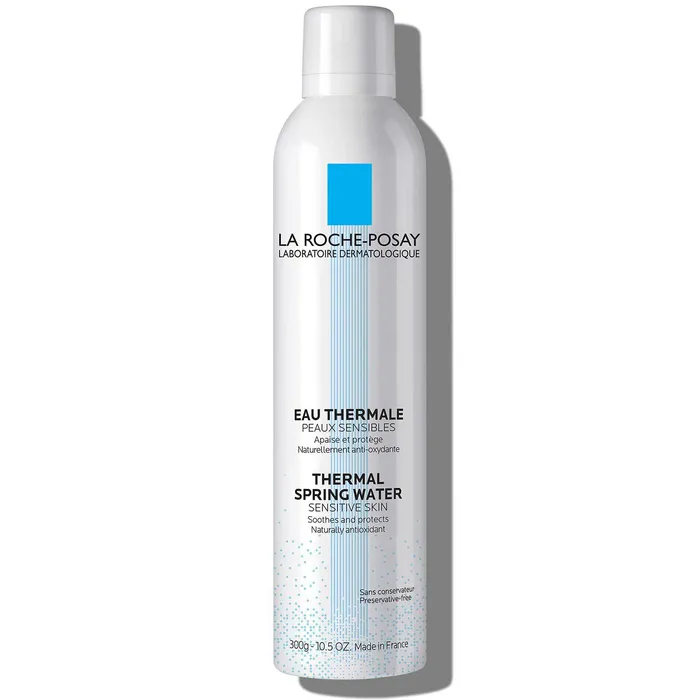
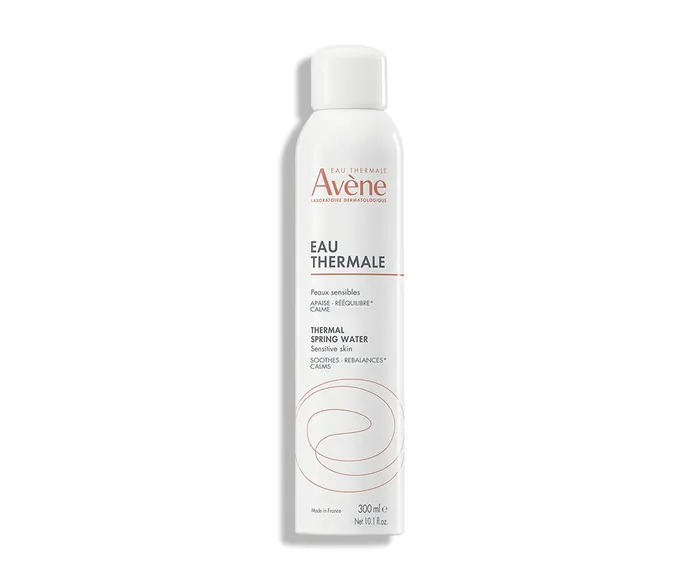
La Roche-Posay Thermal Spring Water Face Mist and Avène Thermal Spring Water come in the same 300 ml can and cost within $1 of each other, so the difference lies in how each brand supports its claims.
| La Roche-Posay Thermal Spring Water Face Mist | Avène Thermal Spring Water | |
|---|---|---|
| Price and size | $19.00 for 300 ml | $20.00 for 300 ml (10.1 fl oz) |
| Price per ounce | $1.87 | $1.97 |
| Ingredient list | Aqua / water | Avène Thermal Spring Water, nitrogen |
| What the brand highlights | Minerals, trace elements, a high concentration of selenium | Minerals, and water "rich in postbiotic microflora" |
| Study details published | None | Two studies cited, no sample sizes |
Both brands tell you to spray, leave the mist on for 2 to 3 minutes, and pat off the excess. La Roche-Posay's site lists its can as 300 ml, while the can label reads 300 g (10.5 oz).
Avène cites two studies. The first is a sensory analysis of four spa spring waters with different mineral concentrations, published in the International Journal of Dermatology, which Avène uses to support "skin will not sting or burn." The second is a Pierre Fabre Research Institute study that used clinical thermography to evaluate the water's soothing effect after laser treatment. The page gives no sample size for either, so both results are brand-reported with no published sample size. aveneusa.com also says more than 150 studies back the water, without listing them.
La Roche-Posay says its water is rich in minerals with "scientifically demonstrated soothing and antioxidant properties." It names no study and gives no selenium concentration, so this is also brand-reported with no published sample size.
La Roche-Posay wins on price, and Avène names a published paper.
Toleriane Double Repair vs Tolerance Control
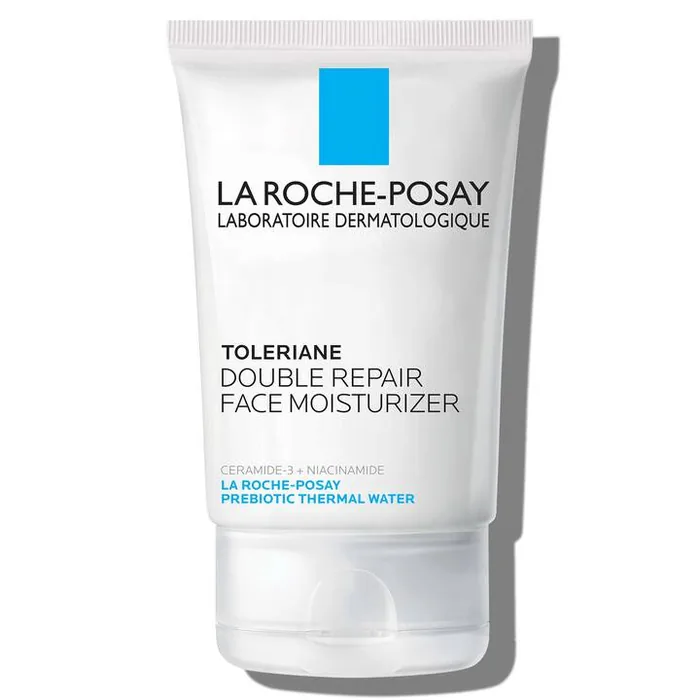
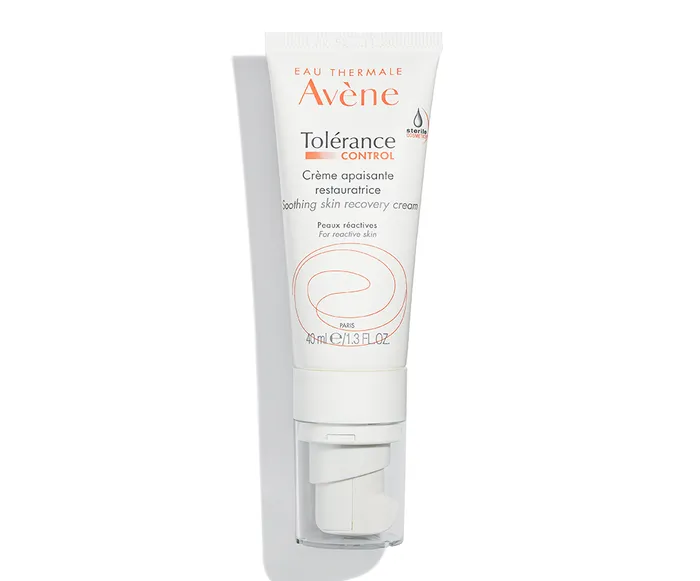
La Roche-Posay Toleriane Double Repair costs about a quarter as much per ounce as Avène Tolerance Control and adds ceramide NP and niacinamide, while Tolerance Control has the shorter, preservative-free formula.
| Toleriane Double Repair Face Moisturizer | Tolerance Control Soothing Skin Recovery Cream | |
|---|---|---|
| Price and size | $24.99 for 100 ml | $40.00 for 40 ml (1.3 fl oz) |
| Price per ounce | $7.39 | $29.57 |
| Named key ingredients | Ceramide NP, niacinamide, glycerin, prebiotic thermal water | D-Sensinose postbiotic, Avène Thermal Spring Water |
| Ingredients listed | 18 | 15 |
| Preservatives | Brand icon says paraben-free | Sterile packaging; brand says preservative-free |
| Fragrance and denatured alcohol | None listed | None listed |
| Skin types named | Normal/combination, dry, sensitive | Hypersensitive, reactive |
Toleriane Double Repair lists niacinamide 6th and ceramide NP 10th, with squalane third. La Roche-Posay claims barrier results after 1 hour, up to 48-hour hydration, and a rebalanced skin microbiome backed by "10 years of research" and "19 clinical studies." The page identifies none of those studies and gives no sample size for any claim.
Tolerance Control comes in sterile packaging, which Avène says keeps the formula free of preservatives, parabens, and fragrance. Avène names D-Sensinose, a postbiotic, as its key ingredient. It reports that the cream "calms skin in 30 seconds," from a clinical evaluation of 25 people on its Sensitive Scale right after application. The 48-hour barrier claim rests on a lab test of Avène Thermal Spring Water on epidermis grown in reduced water conditions: one ingredient tested outside the body, not the finished cream on people. The 24-hour hydration claim has no footnote.
For daily use on normal, combination, or dry skin, Toleriane Double Repair is the better value. Tolerance Control makes sense if your skin reacts to most moisturizers and you accept paying about four times more per ounce.
Toleriane Hydrating Gentle Cleanser vs Tolerance Extremely Gentle Cleanser
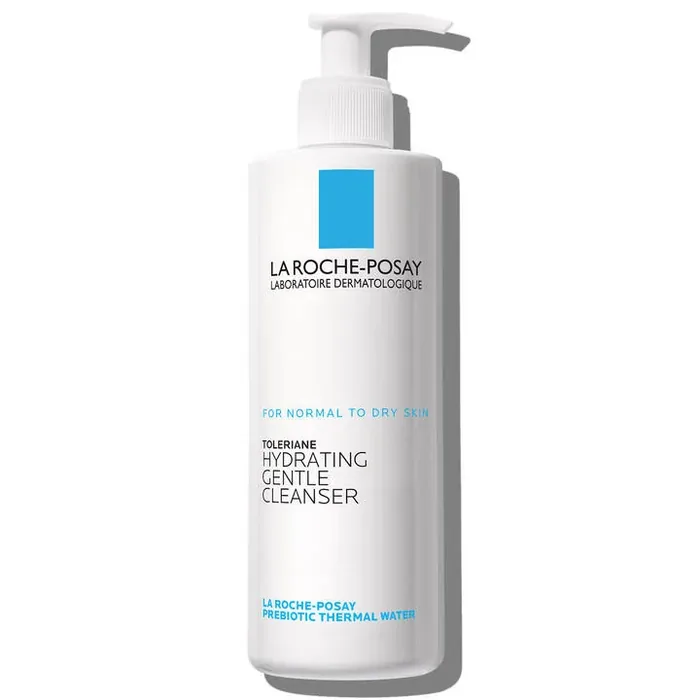
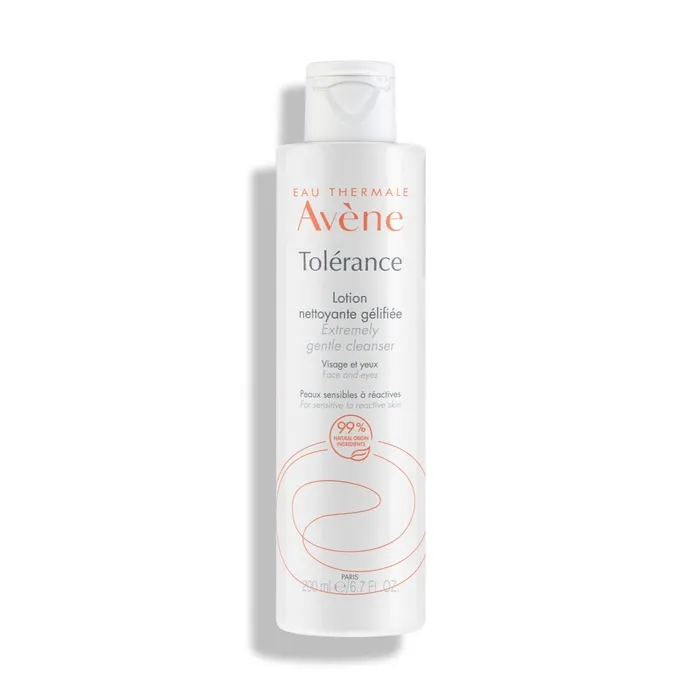
La Roche-Posay's Toleriane Hydrating Gentle Facial Cleanser rinses off with water, while Avène's Tolerance Extremely Gentle Cleanser is a no-rinse gel you wipe away with a cotton pad, so first decide whether you want to cleanse at the sink.
| Toleriane Hydrating Gentle Facial Cleanser | Tolerance Extremely Gentle Cleanser | |
|---|---|---|
| Format | Rinse-off cream | No-rinse gel, wiped off with a cotton pad |
| Price and size | $19.99 for 400 ml | $28.00 for 200 ml (6.7 fl oz) |
| Price per ounce | $1.48 | $4.14 |
| Brand-reported result | 94% said it felt gentle, 93% said it rinsed easily | 86% immediate reduction in skin discomfort |
| Type of test | Four-week consumer study, no sample size | Clinical evaluation, 33 people aged 19 to 57 |
| Brand's use notes | Combination or dry skin, not oily skin | Face, eyes, and lips |
The two results are not comparable. La Roche-Posay's figures are self-assessments from a study that does not say how many people took part. Avène's 86% is a clinical score on its Sensitive Scale right after first use.
La Roche-Posay recommends a makeup remover or micellar water before this cleanser, which makes it the second step of double cleansing. Its formula adds ceramide NP, niacinamide, and panthenol. Avène's lists sodium cetearyl sulfate and uses sodium benzoate as its preservative. Avène also sells a rinse-off Tolerance Foaming Facial Cleanser for $20.00, which we did not compare. For another rinse-off matchup, see our CeraVe vs La Roche-Posay cleanser comparison.
Cicaplast Balm B5+ vs Cicalfate+
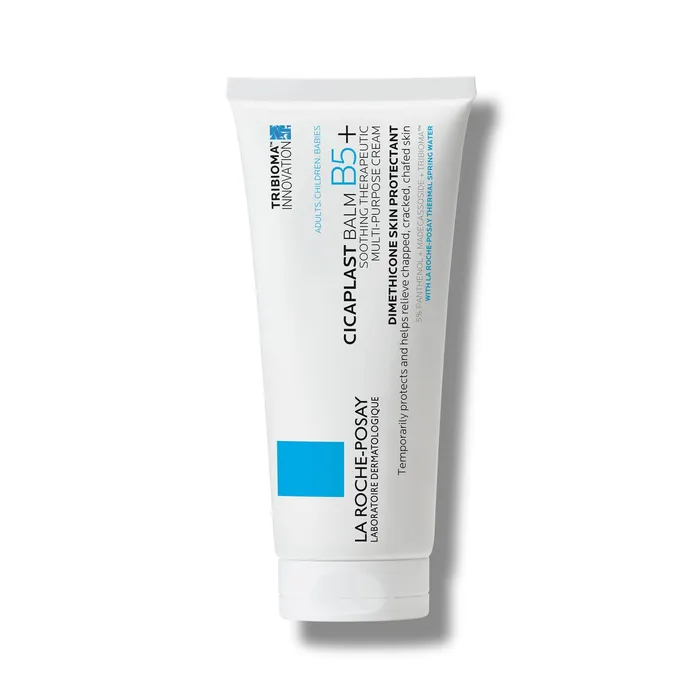
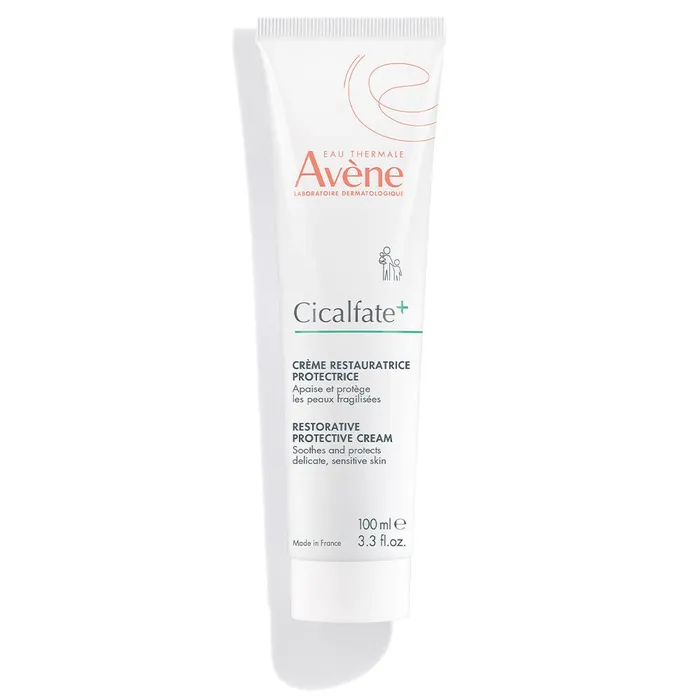
La Roche-Posay Cicaplast Balm B5+ and Avène Cicalfate+ Restorative Protective Cream are both multi-purpose barrier creams for face and body in 100 ml tubes, and Cicaplast costs less per ounce.
| Cicaplast Balm B5+ | Cicalfate+ Restorative Protective Cream | |
|---|---|---|
| Price and size | $32.99 for 100 ml (3.38 fl oz) | $40.00 for 100 ml (3.3 fl oz) |
| Price per ounce | $9.76 | $11.83 |
| Named key ingredients | Dimethicone 1% (OTC skin protectant), 5% panthenol, madecassoside, Tribioma prebiotic complex | C+-Restore postbiotic, copper-zinc sulfate complex |
| Brand-reported results | 100% invisible on skin, 98% absorbs quickly, 85% immediate soothing, with no published sample size or study type | Clinical rating at 48 hours in 248 people; 80% less skin discomfort at 48 hours, self-assessed by 88 people |
Cicaplast is sold in the US as an over-the-counter skin protectant, with 5% panthenol and madecassoside from centella asiatica. Cicalfate+ lists copper sulfate, zinc sulfate, and zinc oxide. Both brands say the National Eczema Association has accepted their cream. Textures, full ingredient lists, and every claim footnote are in Cicaplast Balm B5+ vs Cicalfate+ compared in full.
Which is cheaper, La Roche-Posay or Avène?
La Roche-Posay is cheaper per ounce than Avène in all four pairs, and the gap is widest for moisturizer. Per-ounce prices are calculated from each brand's listed ml size.
| Product | Price | Size | Per ounce |
|---|---|---|---|
| La Roche-Posay Thermal Spring Water Face Mist | $19.00 | 300 ml | $1.87 |
| Avène Thermal Spring Water | $20.00 | 300 ml | $1.97 |
| La Roche-Posay Toleriane Double Repair | $24.99 | 100 ml | $7.39 |
| Avène Tolerance Control | $40.00 | 40 ml | $29.57 |
| La Roche-Posay Toleriane Hydrating Gentle Facial Cleanser | $19.99 | 400 ml | $1.48 |
| Avène Tolerance Extremely Gentle Cleanser | $28.00 | 200 ml | $4.14 |
| La Roche-Posay Cicaplast Balm B5+ | $32.99 | 100 ml | $9.76 |
| Avène Cicalfate+ | $40.00 | 100 ml | $11.83 |
Prices were read from laroche-posay.us and aveneusa.com on September 17, 2026. Sales, sets, and retailer pricing change them. Avène's site takes 15% off subscribe-and-save orders and ships free with no minimum, which narrows the gap on repeat buys.
Which is better for sensitive skin, La Roche-Posay or Avène?
Neither La Roche-Posay nor Avène wins on fragrance or alcohol, because none of the eight products lists fragrance, a fragrance allergen, or denatured alcohol. The differences are in preservatives and a few specific ingredients.
| Product | Fragrance or fragrance allergens | Denatured alcohol | Worth knowing |
|---|---|---|---|
| La Roche-Posay Thermal Spring Water Face Mist | None listed | None listed | One ingredient listed |
| Avène Thermal Spring Water | None listed | None listed | Spring water plus nitrogen; brand states vegan |
| Toleriane Double Repair | None listed | None listed | Contains dimethicone |
| Tolerance Control | None listed | None listed | No preservative; contains cetearyl alcohol and beeswax |
| Toleriane Hydrating Gentle Facial Cleanser | None listed | None listed | Contains disodium EDTA |
| Tolerance Extremely Gentle Cleanser | None listed | None listed | Preserved with sodium benzoate; contains cetearyl alcohol |
| Cicaplast Balm B5+ | None listed | None listed | Preserved with phenoxyethanol; contains shea butter |
| Cicalfate+ | None listed | None listed | Contains mineral oil and beeswax |
Cetearyl alcohol, on two Avène labels, is a fatty alcohol, not denatured alcohol. If preservatives are your trigger, Tolerance Control is the only cream here sold as preservative-free. Whichever brand you choose, patch-test a new product first, and see our guide to supporting your skin barrier.
What we would buy
- A budget moisturizer for sensitive skin: La Roche-Posay Toleriane Double Repair.
- A moisturizer for skin that reacts to almost everything: Avène Tolerance Control.
- A rinse-off cleanser for dry or combination skin: La Roche-Posay Toleriane Hydrating Gentle Facial Cleanser.
- Cleansing without water, including around the eyes: Avène Tolerance Extremely Gentle Cleanser.
- A multi-purpose balm for dry patches: La Roche-Posay Cicaplast Balm B5+ on price, or Avène Cicalfate+ for published sample sizes.
- A face mist: La Roche-Posay on price, or Avène for a named study.
Sources
- laroche-posay.us product pages and ingredient lists for all four La Roche-Posay products, captured September 17, 2026
- aveneusa.com product pages and ingredient lists for all four Avène products, plus the Hydrotherapy Center and About pages, captured September 17, 2026
- Pierre Fabre, Avène one billion euros revenue announcement, pierre-fabre.com
- Pierre Fabre For Med, Who we are, pierrefabreformed.com
- Avène-les-Bains Hydrotherapy Center, history page, centrethermalavene.com
- Bacle I, Meges S, Lauze C, Macleod P, Dupuy P. Sensory analysis of four medical spa spring waters containing various mineral concentrations. International Journal of Dermatology, 1999 (PMID 10561055)
Editor's update
Published September 17, 2026. Prices, sizes, full ingredient lists, and claim footnotes for all eight products were read from laroche-posay.us and aveneusa.com on that date. Avène's history comes from Pierre Fabre, Pierre Fabre For Med, and the Avène hydrotherapy center; those sources disagree on whether Pierre Fabre bought the center in 1974 or 1975, so the timeline shows a range. Avène's thermal water page dates its cited sensory study to 1993, while PubMed lists it as 1999. The two Tolerance Control claim footnotes are unnumbered and were matched to claims in page order.