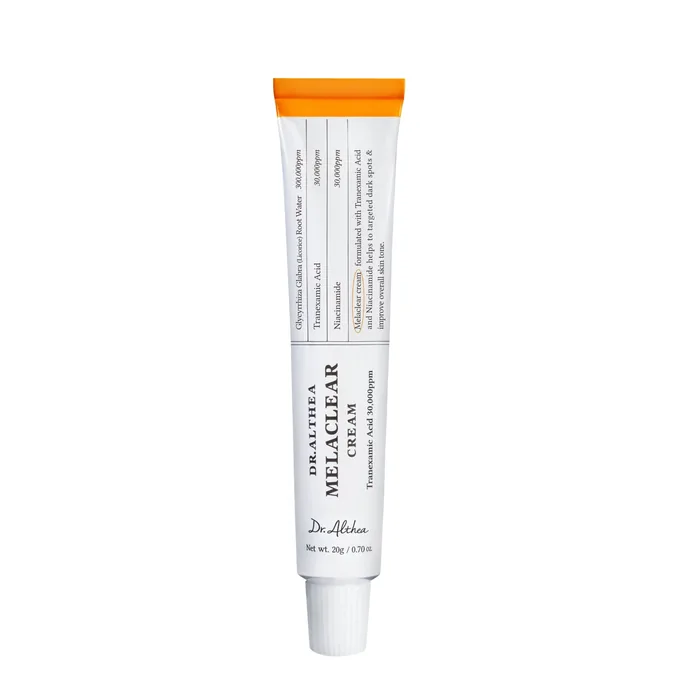
Dr. Althea Melaclear Cream Review
Three brightening actives, each hitting a different step of pigment formation.
BLC Research Score
A research-based assessment from ingredient and formula analysis plus reputation, not a hands-on lab test. See our scoring approach.
- Best for
- Uneven tone, dark spots, and post-acne marks
- Price
- $29.00 / Full size
- Main claim
- Fades the look of dark spots and evens skin tone
- Texture
- A light cream. The emollients are coco-caprylate/caprate and caprylic/capric triglyceride with no butters or heavy waxes on the list, so the finish should be closer to a gel-cream than a rich night cream.
A brightening cream built on niacinamide and tranexamic acid, both sitting high in the ingredient list, in a licorice root water base. The three brightening actives work at three different points in the melanin pathway rather than duplicating each other, which is a genuinely considered piece of formulation. It is fragrance-free. The limits are that Dr. Althea publishes no percentages and no test data, and topical tranexamic acid is the mildest of that ingredient's three routes of use.
Check price at Dr.Editorial pick only.
Quick verdict
A brightening cream built on niacinamide and tranexamic acid, both sitting high in the ingredient list, in a licorice root water base. The three brightening actives work at three different points in the melanin pathway rather than duplicating each other, which is a genuinely considered piece of formulation. It is fragrance-free. The limits are that Dr. Althea publishes no percentages and no test data, and topical tranexamic acid is the mildest of that ingredient's three routes of use.
Pros and cons
Pros
- Niacinamide and tranexamic acid both sit above the preservative line, so both are meaningfully dosed
- The three brightening actives target different steps of pigment formation instead of repeating one mechanism
- Niacinamide has a split-face RCT behind it for melasma at 4 percent, non-inferior to 4 percent hydroquinone with fewer side effects
- Tranexamic acid is backed by a meta-analysis of 22 randomized trials across all routes of use
- Fragrance-free, with no parfum or declared allergen on the label
- Ceramide NP and a three-weight hyaluronic acid blend support the barrier alongside the actives
Cons
- No percentages are published, so we cannot confirm niacinamide reaches the 4 to 5 percent used in the trials
- Topical tranexamic acid is the weakest of its three routes; the strongest trial data are for oral dosing
- Licorice root water is a dilute aqueous distillate, not a standardized glabridin extract, and its active content is unstated
- Ceramide NP, the hyaluronic acid blend, and sodium DNA all sit below the preservative line, so they are present in small amounts
- Dr. Althea publishes no clinical or consumer test results for this product
- Brightening actives need daily sunscreen to hold any result, which is a separate purchase
What is Dr. Althea Melaclear Cream?
Dr. Althea Melaclear Cream is a Korean brightening moisturizer aimed at dark spots, post-acne marks, and uneven tone. Its water phase is licorice root water rather than plain water, and niacinamide and tranexamic acid sit fifth and sixth on the ingredient list, above the preservative system, which means both are present at working levels rather than as label decoration. A supporting cast of adenosine, ceramide NP, three molecular weights of hyaluronic acid, and several botanical extracts sits lower down. In South Korea both niacinamide and tranexamic acid are MFDS functional-cosmetic whitening actives, so a brightening claim there requires pre-market registration rather than being a free marketing choice.
Key ingredients
What the hero actives in Melaclear Cream are supposed to do.
Niacinamide
Fifth on the list. Blocks the transfer of pigment from melanocytes to skin cells rather than inhibiting tyrosinase, so it works on a different step than the licorice. A split-face RCT found 4 percent non-inferior to 4 percent hydroquinone for melasma with fewer side effects. It also raises the skin's own ceramide production.
Tranexamic Acid
Sixth on the list. Interrupts the plasmin signal that UV exposure uses to switch melanocytes on, which is upstream of where most brighteners act. A meta-analysis of 22 randomized trials supports it, though the oral route carries most of that weight and topical is the mildest expression.
Licorice Root Water
Second on the list and the base of the formula. Licorice owes its brightening reputation to glabridin, which inhibits tyrosinase and calms UV-driven redness. The evidence is animal and cell-level rather than human trial, and a root water is a dilute form, so treat this as the gentlest of the three.
Adenosine
A Korean functional-cosmetic anti-wrinkle active. It works at around 0.04 percent, so its low position on the list is expected rather than a shortfall.
Ceramide NP
A skin-identical barrier lipid, included in support of the actives rather than as the point of the product. It sits below the preservative line, so the amount is small.
Learn more about these actives
Rice Ferment
A K-beauty and J-beauty staple derived from rice and its fermentation, used to hydrate, soften, and brighten the look of dull, uneven skin.
Read the full Rice Ferment guide ->Tranexamic Acid
A targeted brightening active that fades stubborn discoloration, especially the appearance of melasma and post-inflammatory marks that resist other ingredients.
Read the full Tranexamic Acid guide ->Niacinamide
A multi-tasking vitamin B3 derivative that reduces pore appearance, calms redness, brightens uneven tone, and strengthens the skin barrier.
Read the full Niacinamide guide ->Adenosine
A nucleoside that signals skin cells to repair and regenerate. Smooths the look of fine lines and supports overall skin tone.
Read the full Adenosine guide ->Texture, scent, and application
Texture
A light cream. The emollients are coco-caprylate/caprate and caprylic/capric triglyceride with no butters or heavy waxes on the list, so the finish should be closer to a gel-cream than a rich night cream.
Scent
Fragrance-free. No parfum and no declared fragrance allergens on the label.
Application
Apply after serum, morning and night. Dr. Althea also positions it as an overnight brightening mask in a thicker layer. Daily sunscreen is not optional with a formula like this, because unprotected UV exposure reactivates the pigment pathway all three actives are trying to quiet.
What we updated
- September 1, 2026
Page checked, no changes found.
What results can you expect?
Tone work is slow. The trials behind niacinamide and tranexamic acid run 8 to 12 weeks, so judge this on that timescale rather than in a fortnight. Expect a gradual softening in how visible dark spots and post-acne marks are, alongside everyday hydration. It changes the appearance of pigment; it does not remove it, and it is not a treatment for melasma.
Who is it best for?
- Uneven tone, post-acne marks, or sun-related dark spots
- Anyone who wants brightening actives without fragrance in the formula
- Readers who prefer several complementary actives over one high-percentage active
- Skin that finds stronger brighteners such as high-dose vitamin C irritating
Who should avoid it?
- Anyone wanting a fast or dramatic change in pigment, which no cosmetic cream delivers
- Readers who need published percentages before buying
- Anyone treating diagnosed melasma, which is a conversation with a dermatologist rather than a cream purchase
- Skin that reacts to niacinamide, which a minority of people do
Price and value for money
About $29.00 direct from Dr. Althea. Size is not stated on the product page, which makes cost per ml impossible to calculate and is the one piece of information we would most want added.
Value verdict: Fair for a fragrance-free formula carrying two well-evidenced brightening actives at working positions, with the caveat that the missing size and percentages make it hard to compare against rivals on paper.
One-time
$29.00
/ Full size
Alternatives to Dr. Althea Melaclear Cream
Other face creams we have reviewed.
ALASTIN
Soothe + Protect Recovery Balm
$52.00 / Full size
Read review ->Aveeno
Calm + Restore Oat Gel Moisturizer
$19.97 / 1.7 fl oz (50 mL)
Read review ->Avene
Cicalfate+ Restorative Protective Cream
$40.00 / 3.3 fl oz (100ml)
Read review ->Avene
Tolerance Control Soothing Skin Recovery Cream
$40.00 / 1.3 fl oz (40ml)
Read review ->See category roundups:
Final verdict
A brightening cream built on niacinamide and tranexamic acid, both sitting high in the ingredient list, in a licorice root water base. The three brightening actives work at three different points in the melanin pathway rather than duplicating each other, which is a genuinely considered piece of formulation. It is fragrance-free. The limits are that Dr. Althea publishes no percentages and no test data, and topical tranexamic acid is the mildest of that ingredient's three routes of use.
Check price at Dr.Independent. No sponsored placement.
Comparing options? See all our tested picks on the BestLiftingCream.com homepage.
Frequently asked questions about Dr. Althea Melaclear Cream
Editor's note
This is a research-based assessment from the ingredient list and published evidence, not a hands-on lab test, so we do not report texture or wear observations from use. The ingredient analysis is graded against primary sources: niacinamide and tranexamic acid both carry randomized trial evidence, while licorice's brightening data are animal and cell-level rather than human. Dr. Althea publishes no clinical or consumer test results for this product, and no ingredient percentages, so the assessment rests on ingredient identity and position rather than on dose.
Last updated: Jun 27, 2026. Read how we evaluate.