Cetaphil vs Aquaphor: the short answer
Cetaphil Healing Ointment lists petrolatum 71.5% as its active ingredient, contains no lanolin, and costs $1.25 per ounce. Aquaphor Healing Ointment lists petrolatum 41%, includes lanolin alcohol, and costs $1.79 per ounce.
Cetaphil and Aquaphor both sell an over-the-counter skin protectant ointment as their best known product, and those two jars are what most people mean when they compare the brands. This is a label and data comparison: every price, percentage and ingredient below comes from the brand sites and retail listings named in the sources, read on September 28, 2026. We did not put either ointment on skin.
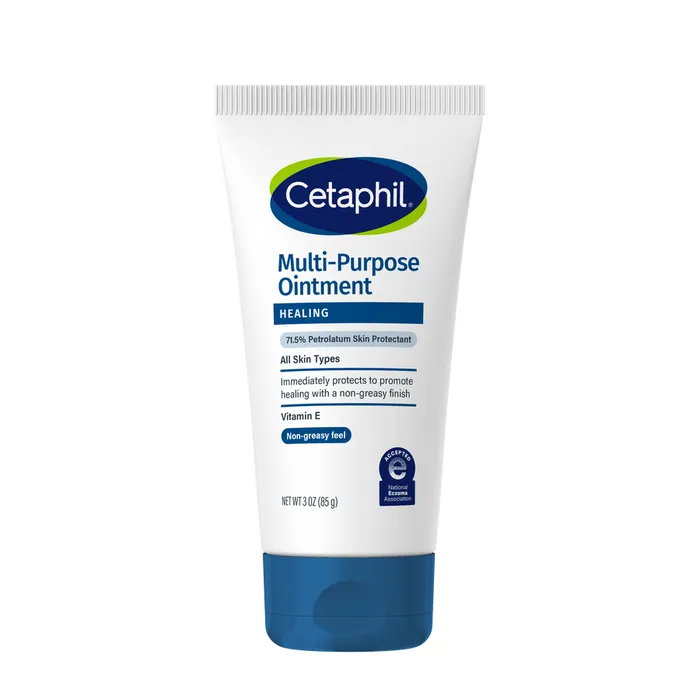
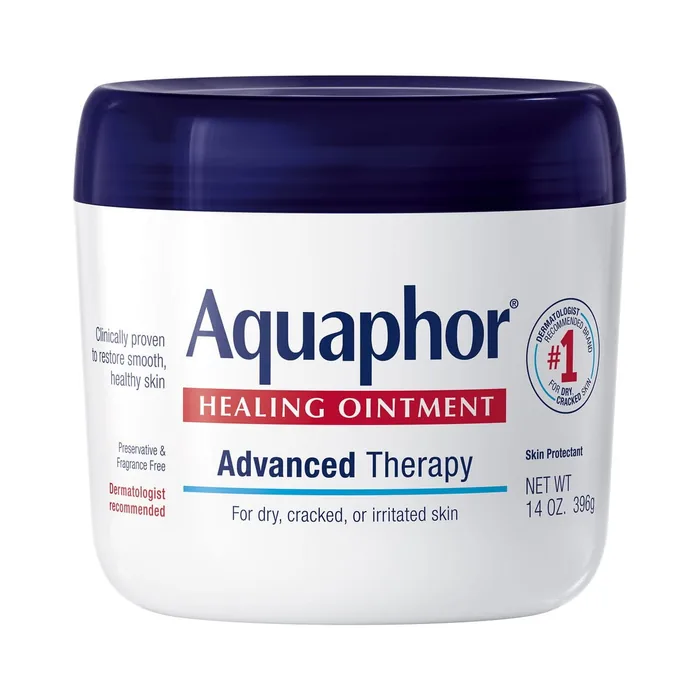
The two Drug Facts panels answer the same question in different proportions. Cetaphil's ointment is 71.5% petrolatum with five inactive ingredients. Aquaphor's is 41% petrolatum with six other ingredients on the list, including lanolin alcohol, panthenol and glycerin. That is a gap of 30.5 percentage points in the active, and it is the one fact that decides most of this comparison.
Choose this if
- Choose Cetaphil Healing Ointment for the higher stated active and the shorter list. Its panel prints petrolatum 71.5% and names five inactive ingredients.
- Choose Cetaphil Healing Ointment if you avoid lanolin. Cetaphil states the ointment is formulated without lanolin, while Aquaphor lists lanolin alcohol fourth of seven.
- Choose Aquaphor Healing Ointment if you want panthenol and glycerin in the jar, or a lip-sized tube. Both ingredients are on Aquaphor's list and on neither of Cetaphil's five inactives, and Aquaphor sells sizes down to 0.25 oz.
What does skin protectant mean on an Aquaphor or Cetaphil label?
Skin protectant is an over-the-counter drug category, and both ointments are sold in it, which is why each one prints a Drug Facts panel instead of a plain cosmetic ingredient list. A Drug Facts panel names an active ingredient, its percentage and a purpose.
Aquaphor's product page lists "Active Ingredients: Petrolatum (41%)" and describes the jar as a skin protectant ointment with panthenol and glycerin. Cetaphil's product page prints "ACTIVE INGREDIENTS Petrolatum 71.5%" under its full ingredient block, and the package front reads "71.5% Petrolatum Skin Protectant", which states the percentage and the purpose in one line.
What each brand says the ointment is for stays inside that category. Aquaphor's page says the ointment protects and helps relieve chapped, dry, cracked or irritated skin and lips, and protects and soothes minor cuts, scrapes and burns. Cetaphil says its ointment is formulated with a high concentration of petrolatum to protect dry, irritated skin, and that it is accepted by the National Eczema Association as gentle on eczema-prone skin. Those are the brands' words, not ours, taken from what each publishes online. The full printed Uses, Warnings and Directions text of neither panel was retrievable.
Aquaphor Healing Ointment vs Cetaphil Healing Ointment: the two panels side by side
Cetaphil is the more concentrated and the cheaper of the two; Aquaphor is the more ingredient-rich and the only one that names lips on its label. Both are fragrance free by the brands' own statements.
| Aquaphor Healing Ointment | Cetaphil Healing Ointment | |
|---|---|---|
| Active ingredient stated | Petrolatum (41%) | Petrolatum 71.5% |
| Purpose stated | Skin protectant | Skin protectant |
| Ingredients beyond petrolatum | 6: mineral oil, ceresin, lanolin alcohol, panthenol, glycerin, bisabolol | 5 inactive: cetearyl ethylhexanoate, shea butter, beeswax, microcrystalline wax, tocopheryl acetate |
| Lanolin | Lanolin alcohol, 4th of 7 | Cetaphil states the formula is lanolin free |
| Price and size (US) | $24.99 for 14 oz | $14.99 for 12 oz |
| Price per ounce | $1.79 | $1.25 |
| Fragrance | None listed; brand states preservative and fragrance free | None listed; brand states formulated without fragrance and preservatives |
| Texture wording | Brand calls the formula water free and publishes no separate texture descriptor | Brand says it absorbs quickly without leaving behind a greasy residue; package front reads "Non-greasy feel" |
| Other sizes on the brand site | 0.25 oz, 1.75 oz, 3.5 oz, 7 oz, 14 oz, plus 2x0.35 oz packs | 3 oz, 12 oz |
Cetaphil gives this ointment two names: the brand page headline calls it Multi-Purpose Ointment, while Cetaphil's own landing page and Target call it Healing Ointment. We use Cetaphil Healing Ointment throughout.
Aquaphor's list reads as an ointment with a supporting cast: mineral oil and ceresin wax building out the base, then lanolin alcohol, panthenol, glycerin and bisabolol. Aquaphor names petrolatum, panthenol and glycerin as its key ingredients. Cetaphil's list is petrolatum plus an emollient ester, shea butter, two waxes and vitamin E acetate. Neither list contains water, which is what separates both ointments from a cream.
Which is better for very dry patches, Cetaphil or Aquaphor?
Cetaphil Healing Ointment, going by the panels: 71.5% petrolatum against 41% means more of the occlusive ingredient per application. Petrolatum is what makes both products sit on skin rather than sink into it, and Cetaphil uses more of it.
The independent research supports petrolatum as an ingredient, not either jar. A 2021 study applied petrolatum directly to dry leg skin alongside a petrolatum-depositing body wash and a regular body wash, and reported positive effects on stratum corneum barrier function judged by biomarker analysis, biophysical measurement and dry skin grading. That tested petrolatum on legs in a wash protocol. It does not tell you how either of these ointments performs.
Each brand reports its own results, and neither publishes a sample size. Aquaphor calls the ointment clinically proven to restore smooth, healthy skin, with no sample size or study length, and calls itself the number one dermatologist recommended brand for dry, cracked skin. Cetaphil says 89% of users reported noticeable improvement in their skin's texture in one week, a consumer self-assessment that also carries no published sample size.
In practice, the higher-petrolatum jar is the one for heels, elbows and flaking patches. Both belong to the category our slugging guide and skin barrier guide call the sealing step, not the treating step.
Which is better for lips and hands, Aquaphor or Cetaphil?
Aquaphor for lips, because it is the only one of the two whose label names them, and either one for hands, with Cetaphil the better value. Aquaphor's page states the ointment protects and helps relieve chapped, dry, cracked or irritated skin and lips. Cetaphil's page does not name lips in the claims we captured.
Format matters as much as formula here. Aquaphor sells 0.25 oz and 1.75 oz sizes and 0.35 oz twin packs that fit a pocket, so there is a version sized for reapplying through the day. Cetaphil's smallest is 3 oz. Our lip balm guide covers the category.
For hands, the choice comes down to feel and price. Cetaphil states its formula absorbs quickly without a greasy residue and prints "Non-greasy feel" on the front of the package, which matters on hands you plan to use straight away. Aquaphor publishes no comparable texture line, only that the formula is water free. Cetaphil's 12 oz jar at $1.25 per ounce is also the cheaper way to keep one by every sink.
Does the lanolin alcohol in Aquaphor matter?
It matters if you already know you react to lanolin, and for most people it will not. Aquaphor lists lanolin alcohol fourth of seven ingredients. Cetaphil states its ointment is formulated without fragrance, preservatives and lanolin, so the Cetaphil jar is the straightforward pick if lanolin is on your avoid list.
Lanolin alcohol is a recognized contact allergen. The North American Contact Dermatitis Group reviewed lanolin patch test results from 43,691 patients tested between 2001 and 2018 with lanolin alcohol 30% or Amerchol L-101 50% in petrolatum, and 3.3% had a positive reaction, with 2.8% judged currently relevant. Those patients had been referred for patch testing because contact dermatitis was suspected, so that share is not the rate across everyone who buys an ointment.
The reading stays narrow. Check the ingredient list if a lanolin product has bothered you before, or if you are putting an ointment on broken skin. Otherwise treat lanolin alcohol as one of seven ingredients worth knowing about, not a reason to skip the jar.
Which Cetaphil moisturizer works if you do not want an ointment?
Cetaphil has two everyday moisturizers in this comparison and Aquaphor has none, so if you want a lotion or cream rather than an ointment, Cetaphil is the brand with the options. Cetaphil Moisturizing Cream is the rich one for face and body. Daily Hydrating Lotion is the light face lotion.
| Moisturizing Cream | Daily Hydrating Lotion | |
|---|---|---|
| Format | Rich, non-greasy cream for face and body | Ultra-light, oil-free face lotion |
| Price and size (US) | $18.99 for 16 oz | $14.49 for 3 fl oz (89 ml) |
| Price per ounce | $1.19 | $4.81 |
| Petrolatum | 3rd of 23 ingredients | Not listed |
| Named key ingredients | Niacinamide, panthenol, glycerin, sweet almond oil, tocopheryl acetate | Hydrolyzed hyaluronic acid, glycerin, hydroxyethyl urea |
| Fragrance | None listed | None listed |
| Skin types stated | Dry to very dry, sensitive | All skin types, described as ideal for sensitive combination skin |
| Brand-reported result | Clinically proven to hydrate for 48 hours; 97% of users reported skin seems more hydrated over time, a consumer self-assessment with no published sample size | Locks in moisture for 24 hours, per the brand, with no study detail published |
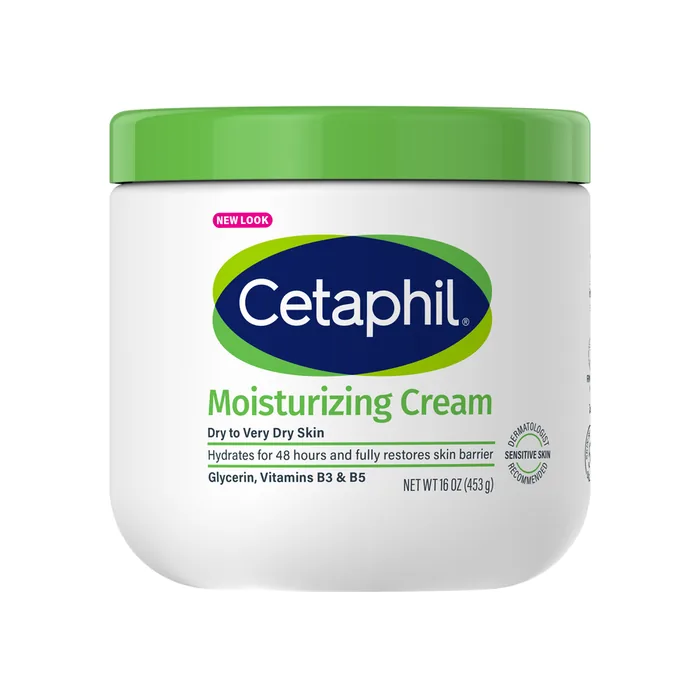
The cream sits between the two ointments and a normal moisturizer. Water is its first ingredient, glycerin its second and petrolatum its third of 23, so it carries some of the same occlusive ingredient in a spreadable base you can use on a face. At $1.19 per ounce in the 16 oz tub it is the cheapest product on this page.
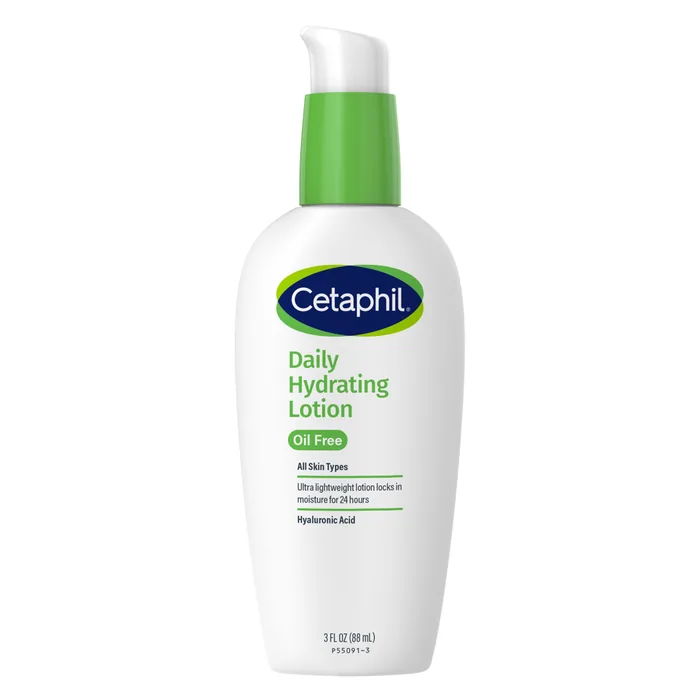
Daily Hydrating Lotion does a different job. It is oil free, petrolatum free, built on hydrolyzed hyaluronic acid and hydroxyethyl urea, and sold in a 3 fl oz face size, which makes it the most expensive per ounce here. It is a daily face moisturizer, not a substitute for an ointment on cracked hands.
Which is cheaper, Cetaphil or Aquaphor?
Cetaphil, on both the ointment and per ounce overall. Cetaphil Healing Ointment costs $0.54 less per ounce than Aquaphor Healing Ointment, about 30% less, and it is cheaper at checkout too despite the jar being only 2 oz smaller.
| Product | Price | Size | Per ounce |
|---|---|---|---|
| Cetaphil Moisturizing Cream | $18.99 | 16 oz | $1.19 |
| Cetaphil Healing Ointment | $14.99 | 12 oz | $1.25 |
| Aquaphor Healing Ointment | $24.99 | 14 oz | $1.79 |
| Cetaphil Daily Hydrating Lotion | $14.49 | 3 fl oz (89 ml) | $4.81 |
Two of these were on promotion the day we read them. Ulta showed Aquaphor Healing Ointment 14 oz at $18.74 against a stated regular price of $24.99, which works out to $1.34 per ounce, and Cetaphil Moisturizing Cream 16 oz at $13.29 against a stated regular price of $18.99, or $0.83 per ounce. Both were sale prices as of September 28, 2026 and will move, so the table uses the regular prices. The ointment and cream sizes are net weights and the lotion is a fluid volume, so the last row is per fluid ounce. Cetaphil Healing Ointment at $14.99 came from Target, which showed no promotion.
Are Aquaphor and Cetaphil the same company?
No. Aquaphor is part of Beiersdorf AG, the Hamburg skincare company that also owns Eucerin, Hansaplast and Nivea, and Beiersdorf groups Aquaphor with Eucerin under its Derma category. Cetaphil belongs to Galderma, which lists Cetaphil first on its brand index, calls it its top dermatological skincare brand, and states that Cetaphil passed 1 billion USD in net sales in 2023.
If you are cross-shopping, our Aquaphor vs Eucerin comparison sets the two Beiersdorf brands against each other, and Cetaphil vs Eucerin puts Galderma's line against Beiersdorf's. If the petrolatum percentage is what you care about, Aquaphor vs Vaseline sets Aquaphor against the other petrolatum staple.
What we would buy
- The higher stated active, the shorter list and the lower price per ounce: Cetaphil Healing Ointment at $14.99 for 12 oz.
- Lanolin to avoid, for any reason: Cetaphil Healing Ointment, which the brand states is lanolin free.
- Lips, or anything that needs a size small enough to carry: Aquaphor Healing Ointment, the only one whose label names lips and the only one sold under 3 oz.
- Panthenol and glycerin alongside the petrolatum: Aquaphor Healing Ointment.
- A face and body moisturizer rather than an ointment, at the lowest price per ounce here: Cetaphil Moisturizing Cream.
- A light daily face lotion with no petrolatum and no oil: Cetaphil Daily Hydrating Lotion.
Sources
- Aquaphor Healing Ointment 14 oz product page, active ingredient percentage and brand claims, aquaphorus.com, captured September 28, 2026
- Aquaphor Healing Ointment ingredient list and price, Ulta listing for the 14 oz jar, ulta.com, captured September 28, 2026
- Cetaphil Multi-Purpose Ointment product page, ingredient list, active percentage and brand claims, cetaphil.com, captured September 28, 2026
- Cetaphil Healing Ointment 12 oz price and additional claims, Target listing, target.com, captured September 28, 2026
- Cetaphil Moisturizing Cream product page and ingredient list, cetaphil.com, with price from the Ulta 16 oz listing, captured September 28, 2026
- Cetaphil Daily Hydrating Lotion product page and ingredient list, cetaphil.com, with price and size from the Target 3 fl oz listing, captured September 28, 2026
- Beiersdorf brand and newsroom pages confirming Aquaphor and Eucerin in the Beiersdorf Derma portfolio, beiersdorf.com, captured September 28, 2026
- Galderma dermatological skincare and brand index pages confirming Cetaphil ownership and 2023 net sales, galderma.com, captured September 28, 2026
- Wei K et al. Effects of petrolatum, a petrolatum depositing body wash and a regular body wash on biomarkers and biophysical properties of the stratum corneum. International Journal of Cosmetic Science, 2021 (PMID 33336384)
- Silverberg JI et al. Lanolin Allergic Reactions: North American Contact Dermatitis Group Experience, 2001 to 2018. Dermatitis, 2022 (PMID 35481824)
Editor's update
Published September 28, 2026. Prices, sizes, ingredient lists, active ingredient percentages and brand claims were read from aquaphorus.com, cetaphil.com, ulta.com and target.com on that date. Two prices in the research were promotional and are not used in the tables: Ulta showed Aquaphor Healing Ointment 14 oz at $18.74 against a stated regular price of $24.99, and Cetaphil Moisturizing Cream 16 oz at $13.29 against a stated regular price of $18.99. The tables use the regular prices and the article notes both sale prices as of September 28, 2026. Cetaphil's ointment is named Multi-Purpose Ointment on its brand page headline and Healing Ointment on the brand's own landing page and at retail; this comparison uses Cetaphil Healing Ointment throughout and notes the other name once. Aquaphor's brand page keeps its ingredient list behind a control that did not open, so the Aquaphor ingredient order comes from the Ulta listing for the same 14.0 oz jar, which opens with the same petrolatum 41% figure the brand page states. The full printed Uses, Warnings and Directions text of neither Drug Facts panel was retrievable, so only the active ingredient, percentage and purpose are reported from the panels. No claim from either brand carries a published sample size, and every percentage claim is labeled accordingly. Ointment and cream sizes are net weights, so those per-ounce figures are per ounce of weight; the 3 fl oz lotion is priced per fluid ounce.